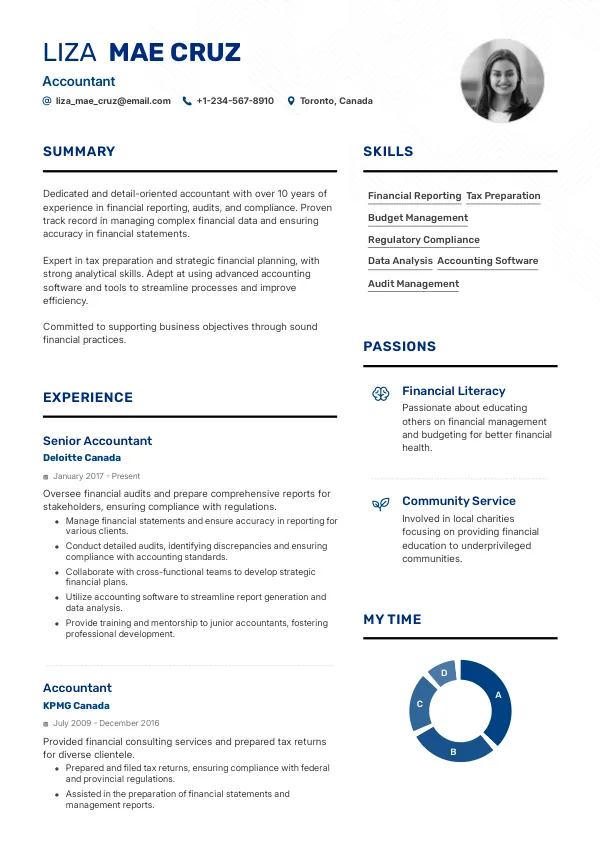
Introduction to Accountant Resume Mistakes
As an accountant in Canada, your resume is a vital tool in securing interviews. However, many candidates make common mistakes that can severely limit their chances of being noticed by employers. Reviewing your resume for hidden errors can save you from repeated rejections.
How Recruiters Evaluate Accountant Resumes
Recruiters and ATS systems assess resumes based on relevant keywords, clear formatting, and structured content. Many candidates fail to grasp the importance of these elements, leading to rejections for issues they may not even notice. A review of your resume can ensure it meets recruiter expectations and ATS requirements.
By understanding what recruiters look for, you can tailor your resume to stand out in the competitive accounting job market.
Enhance your resume to catch recruiters' attention.
Get StartedCommon Accountant Resume Mistakes
Mistake #1 – Poor Formatting
Why this hurts
Inconsistent formatting can confuse recruiters and ATS systems, making it hard to read. Recruiters may reject resumes that appear unprofessional.
Example
- Bad: Mixing fonts and sizes throughout the resume.
- Better: Using a consistent font style and size for all sections.
How to fix
- Choose a clean, professional format and stick with it throughout your resume.
Mistake #2 – Lack of Keywords
Why this hurts
ATS systems filter resumes based on keywords related to job descriptions. Missing these keywords can lead to automatic disqualification.
Example
- Bad: Using generic terms like 'responsible for'.
- Better: Including specific terms like 'financial analysis' or 'tax preparation'.
How to fix
- Analyze job postings for relevant keywords and incorporate them naturally into your resume.
Mistake #3 – Vague Job Descriptions
Why this hurts
Recruiters seek clarity on your capabilities. Vague descriptions fail to convey your contributions and achievements.
Example
- Bad: 'Assisted with audits.'
- Better: 'Led a team of 5 in conducting audits, improving accuracy by 20%.'
How to fix
- Use specific metrics and descriptions to highlight your achievements and impact.
Mistake #4 – Ignoring the Cover Letter
Why this hurts
A resume without a cover letter can seem incomplete. Many recruiters look for a cover letter to gauge your interest and fit.
Example
- Bad: Submitting a resume alone.
- Better: Including a tailored cover letter that connects your experience to the job.
How to fix
- Always pair your resume with a well-written cover letter tailored to the job.
Mistake #5 – Failing to Tailor Your Resume
Why this hurts
Sending a generic resume signals a lack of effort and interest. Recruiters appreciate tailored resumes that reflect specific job requirements.
Example
- Bad: Using the same resume for every application.
- Better: Modifying each resume to align with the job description.
How to fix
- Customize your resume for each job application, highlighting relevant experiences and skills.
Mistake #6 – Overloading with Information
Why this hurts
Too much information can overwhelm recruiters and detract from key points. A cluttered resume can lead to important details being missed.
Example
- Bad: Including every job duty from previous roles.
- Better: Focusing on key achievements and responsibilities relevant to the position.
How to fix
- Limit your resume to the most relevant experiences, ideally tailored to the accountant role.
Mistake #7 – Using Passive Language
Why this hurts
Passive language can make your achievements sound less impactful. Recruiters prefer strong, active language that conveys confidence.
Example
- Bad: 'Was responsible for managing budgets.'
- Better: 'Managed budgets effectively to reduce costs by 15%.'
How to fix
- Use active verbs to describe your experiences and contributions.
Mistake #8 – Ignoring Soft Skills
Why this hurts
While technical skills are vital, soft skills are equally important. Ignoring them can lead recruiters to overlook your overall fit.
Example
- Bad: Listing only technical skills.
- Better: Including soft skills like 'team collaboration' and 'communication'.
How to fix
- Balance technical skills with relevant soft skills that showcase your overall capabilities.
Common ATS-Specific Mistakes
ATS systems often misinterpret resumes that don’t follow standard formats. Common mistakes include using unusual fonts or images that the ATS cannot read. Additionally, file types like PDFs may not always parse correctly, depending on the ATS.
Errors related to ATS are often hard to self-diagnose. A professional resume review can help identify and rectify these issues, increasing your chances of being noticed by recruiters.
Mistakes by Experience Level
Entry-Level
Entry-level accountants often struggle with showcasing relevant experience. It's essential to highlight internships, volunteer work, or relevant coursework. Avoid vague descriptions and focus on what you learned and achieved during these experiences.
Mid-Level
Mid-level accountants should emphasize leadership and specific accomplishments. Mistakes often include not quantifying achievements or neglecting to mention team collaboration. Highlighting your ability to manage projects and contribute to team success is crucial.
Senior / Lead
Senior accountants must demonstrate strategic impact. Common mistakes include failing to convey the breadth of leadership experience and not showcasing industry-specific knowledge. Ensure your resume reflects your capability to influence financial strategies and mentor junior staff.
Ensure your resume is ATS-friendly and effective.
Check NowQuick Checklist Before Applying
- Ensure consistent formatting throughout your resume.
- Incorporate relevant keywords from job descriptions.
- Use specific metrics to highlight achievements.
- Pair your resume with a tailored cover letter.
- Customize your resume for each application.
- Avoid clutter and focus on key experiences.
- Use active language throughout.
- Balance technical skills with soft skills.
- Save your resume as a Word document or standard PDF.
- Double-check for typos and grammatical errors.
FAQs About Accountant Resumes in Canada
What should I include in my accountant resume?
Include your relevant work experience, education, certifications, and key skills. Make sure to tailor your resume for each application.
How long should my accountant resume be?
Your resume should typically be one to two pages long, depending on your experience. Be concise and relevant.
What is the best format for an accountant resume?
A clean, professional format with clear headings and bullet points works best. Avoid excessive graphics or unconventional layouts.
How can I make my resume stand out?
Highlight specific achievements with quantifiable results and tailor your resume to the job description to show alignment.
Should I use a resume template?
Using a template can help with formatting, but ensure it is ATS-friendly and allows for customization to fit your experience.
Take Action to Improve Your Accountant Resume
Don’t let common mistakes hold back your career as an accountant. Review your resume for these pitfalls and make necessary adjustments.
Consider a professional review from mistakes.cv to ensure your resume is polished and ready to impress recruiters.

 UAE
UAE Qatar
Qatar Saudi Arabia
 South Africa
 Brazil
 USA
USA Canada
 Australia
 United Kingdom
 New Zealand
 Singapore
 Germany
 France
 Spain
Spain Greece
 Italy
Italy India
India Philippines
 Malaysia
 Indonesia
 South Korea
 Japan
Japan