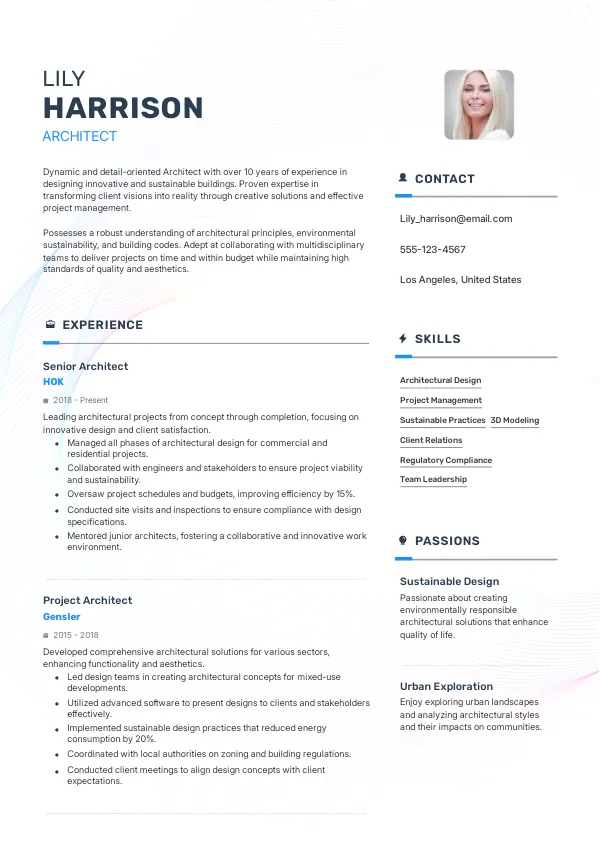
Avoid Architect Resume Mistakes
As an architect in the United States, your resume is a critical tool for landing interviews. Many candidates overlook common mistakes that can significantly reduce their chances of being noticed by recruiters. Understanding these pitfalls is essential to stand out in a competitive job market. To avoid repeated rejections, it’s advisable to check your resume for hidden mistakes with a professional service like mistakes.cv.
How Recruiters Evaluate Architect Resumes
Recruiters use specific criteria when evaluating resumes for architect positions. They focus on relevant experience, technical skills, and design portfolios. Many candidates are rejected due to issues they may not even realize exist, such as poor formatting or lack of keyword relevance. An external review can help identify these overlooked mistakes, ensuring your resume meets industry standards.
By understanding the evaluation process, you can tailor your resume to meet the expectations of hiring managers and increase your chances of securing an interview.
Ensure your resume is ATS-friendly and ready to impress.
Review NowCommon Architect Resume Mistakes
Mistake #1 – Inconsistent Formatting
Why this hurts
Inconsistent formatting makes your resume appear unprofessional. Recruiters may question your attention to detail, a critical skill in architecture.
Example
- Bad: Mixing font styles and sizes throughout the document.
- Better: Consistently using one font type and size for headings and body text.
How to fix
- Choose a clean, professional font and stick to it. Ensure all headings, bullet points, and text are uniform.
Mistake #2 – Weak Summary Statement
Why this hurts
A vague or generic summary fails to capture the attention of recruiters. It does not highlight your unique skills or experiences relevant to the architect role.
Example
- Bad: “I am a dedicated architect with experience.”
- Better: “Innovative architect with 5+ years of experience in sustainable design and project management for residential and commercial projects.”
How to fix
- Craft a compelling summary that highlights your unique skills and achievements, tailored to the architect position.
Mistake #3 – Lack of Relevant Keywords
Why this hurts
Resumes that lack industry-specific keywords can be filtered out by ATS systems. This means your resume might not even be seen by a human recruiter.
Example
- Bad: Omitting terms like “BIM,” “sustainable design,” or “project management.”
- Better: Integrating relevant keywords naturally throughout your resume.
How to fix
- Research relevant keywords from job descriptions and include them in your resume, ensuring they align with your experience.
Mistake #4 – Unclear Project Descriptions
Why this hurts
Vague project descriptions fail to convey the impact of your work. Recruiters want to see specific contributions and outcomes.
Example
- Bad: “Worked on various architectural projects.”
- Better: “Led the design of a 50,000 sq. ft. mixed-use development, resulting in a 20% increase in tenant occupancy.”
How to fix
- Use specific metrics and outcomes in your project descriptions to demonstrate your effectiveness and contributions.
Mistake #5 – Not Showcasing Portfolio
Why this hurts
Failing to include a link to your portfolio can hurt your chances. It’s a crucial aspect of showcasing your work and skills as an architect.
Example
- Bad: No mention of a portfolio.
- Better: “View my portfolio at [your website] to see completed projects.”
How to fix
- Always include a link to your online portfolio in your resume, ensuring it is up-to-date with your best work.
Mistake #6 – Overly Long Resume
Why this hurts
Long resumes can overwhelm recruiters who spend only a few seconds reviewing each one. They prefer concise, relevant information.
Example
- Bad: A two-page resume with irrelevant experiences.
- Better: A one-page resume focused on relevant skills and experiences.
How to fix
- Keep your resume to one page if you have less than 10 years of experience, focusing only on relevant accomplishments.
Mistake #7 – Ignoring Soft Skills
Why this hurts
Architects need strong communication and teamwork skills, which are often overlooked in resumes. Ignoring these can make you seem like a poor fit.
Example
- Bad: “I am a detail-oriented architect.”
- Better: “Collaborative architect skilled in leading cross-functional teams to deliver projects on time and within budget.”
How to fix
- Highlight both technical and soft skills in your resume to present a well-rounded profile.
Mistake #8 – Poor Use of Action Verbs
Why this hurts
Weak verbs can make your achievements sound less impactful. Strong action verbs are essential to convey effectiveness in your roles.
Example
- Bad: “Responsible for designing buildings.”
- Better: “Designed innovative buildings that enhanced community engagement and sustainability.”
How to fix
- Use strong action verbs to describe your achievements and responsibilities, making your contributions stand out.

ATS-Specific Issues for Architects
Applicant Tracking Systems (ATS) can misinterpret your resume if it's not formatted correctly. Common issues include complex layouts, graphics, and unusual file types that ATS cannot parse. Many candidates are unaware of these problems, leading to automatic rejections. An ATS review can help identify these issues before you submit your application.
Mistakes by Experience Level
Entry-Level
Entry-level architects often make the mistake of not highlighting internships or relevant coursework. It’s crucial to showcase any practical experience, even if limited. Including projects from your education can demonstrate your skills and initiative.
Mid-Level
Mid-level candidates sometimes fail to articulate their leadership experiences. It's important to highlight any project management roles or team leadership to show readiness for senior roles.
Senior
Senior architects may overlook the need for ongoing professional development. Highlighting certifications and continuous learning can signal your commitment to staying current in the field.
Get expert feedback on your resume to spot hidden mistakes.
Get FeedbackQuick Checklist for Your Architect Resume
- Ensure consistent formatting throughout the document.
- Craft a compelling summary tailored to architecture.
- Include relevant industry keywords.
- Provide clear, specific project descriptions.
- Link to your updated portfolio.
- Keep your resume concise and relevant.
- Highlight both soft and technical skills.
- Use strong action verbs.
- Consider ATS compatibility in formatting.
- Review for typos and errors.
FAQs About Architect Resumes in the U.S.
What should I include in my architect resume?
Focus on relevant experience, skills, and a link to your portfolio. Tailor your summary to reflect your unique qualifications.
How long should my resume be?
Generally, keep it to one page if you have less than 10 years of experience, focusing on relevant roles.
How can I make my resume ATS-friendly?
Use standard headings, avoid graphics, and include relevant keywords to ensure ATS can read your resume correctly.
Is it necessary to have a portfolio?
Yes, a portfolio is crucial for architects to showcase your work and design capabilities to potential employers.
How can I improve my chances of getting an interview?
Review your resume for common mistakes, tailor it to the job description, and consider a professional review with mistakes.cv.
Take Action to Improve Your Architect Resume
Don’t let common mistakes hold you back from your dream architect position. Take the time to review and improve your resume. Utilizing a service like mistakes.cv can help you identify hidden issues and enhance your application.
Start your journey towards success by ensuring your resume is polished and professional. Review it today!

 UAE
UAE Qatar
Qatar Saudi Arabia
 South Africa
 Brazil
 USA
USA Canada
 Australia
 United Kingdom
 New Zealand
 Singapore
 Germany
 France
 Spain
Spain Greece
 Italy
Italy India
India Philippines
 Malaysia
 Indonesia
 South Korea
 Japan
Japan