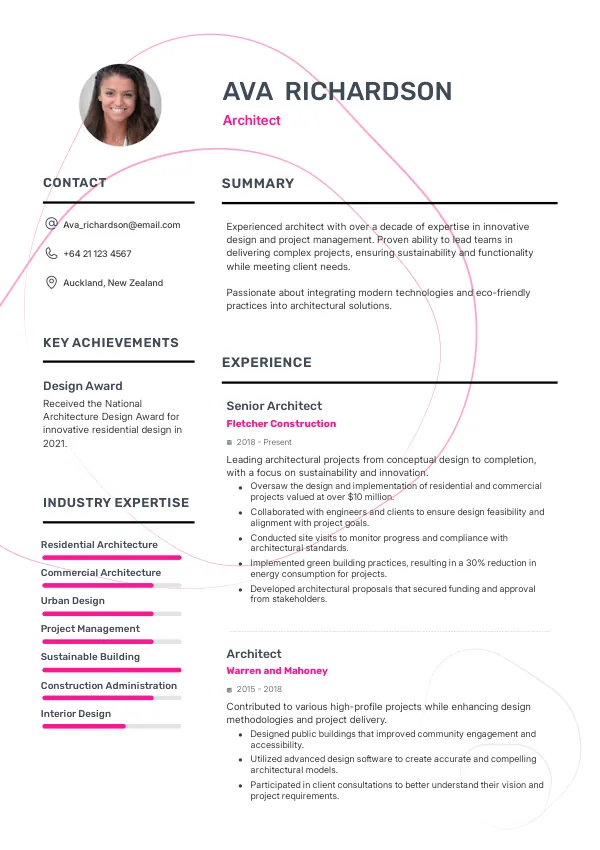
Understanding Architect Resume Mistakes
In New Zealand's competitive job market for architects, a polished resume is essential. Many candidates fail to secure interviews due to common resume mistakes that could easily be avoided. It's crucial to ensure your resume resonates with both recruiters and ATS systems. Consider reviewing your resume early to prevent ongoing rejections.
How Recruiters Evaluate Architect Resumes
Recruiters in New Zealand typically spend mere seconds scanning resumes, focusing on relevant experience and key skills. Many candidates are rejected for mistakes they are unaware of, such as poor formatting or vague descriptions. An external review could help identify these overlooked issues.
Understanding how ATS systems parse resumes can also be beneficial. These systems often filter out resumes lacking specific keywords related to the architectural role.
Get insights on common mistakes to improve your chances.
Learn MoreCommon Resume Mistakes for Architects
Mistake #1 – Poor Formatting
Why this hurts
A cluttered or inconsistent format can turn recruiters off. They quickly judge whether to read further based on visual appeal.
Example
- Bad: Several font sizes, inconsistent bullet points.
- Better: Clean, uniform font with consistent styling.
How to fix
- Choose one font and stick to it. Ensure uniformity in bullet points and spacing.
Mistake #2 – Vague Job Descriptions
Why this hurts
Generalized descriptions make it hard for recruiters to gauge your qualifications. Specificity highlights your relevant experience.
Example
- Bad: "Worked on various projects."
- Better: "Led a team in designing a 12-storey residential building."
How to fix
- Use specific examples that quantify your achievements.
Mistake #3 – Ignoring Keywords
Why this hurts
Failure to include relevant keywords can lead to rejection by ATS, which scans for specific terms.
Example
- Bad: "Experienced in design."
- Better: "Skilled in AutoCAD, Revit, and sustainable design."
How to fix
- Research job descriptions and integrate relevant keywords naturally into your resume.
Mistake #4 – Lack of Project Details
Why this hurts
Not detailing projects can diminish your perceived expertise. Recruiters want to see the depth of your experience.
Example
- Bad: "Worked on commercial buildings."
- Better: "Designed a commercial complex with a focus on energy efficiency."
How to fix
- Include project names, your role, and outcomes to provide context.
Mistake #5 – Over-using Jargon
Why this hurts
While industry terminology is necessary, excessive jargon can alienate recruiters unfamiliar with niche terms.
Example
- Bad: "Utilized synergies to maximize deliverables."
- Better: "Collaborated with team members to enhance project efficiency."
How to fix
- Balance technical language with clear descriptions that anyone can understand.
Mistake #6 – Not Tailoring Your Resume
Why this hurts
A generic resume fails to address specific job requirements. Tailoring shows your genuine interest in the role.
Example
- Bad: Using the same resume for different applications.
- Better: Customizing your summary and skills section for each job.
How to fix
- Update your resume for each application to align with the job description.
Mistake #7 – Neglecting Soft Skills
Why this hurts
Architects need strong communication and teamwork skills. Omitting these can make you appear less versatile.
Example
- Bad: "Focused solely on technical skills."
- Better: "Excellent communication and collaboration with multidisciplinary teams."
How to fix
- Highlight soft skills alongside technical abilities in your experience.
Mistake #8 – Ignoring a Personal Statement
Why this hurts
A personal statement can set you apart. It offers insight into your career aspirations and personality.
Example
- Bad: No personal statement.
- Better: "Passionate about sustainable architecture and innovative design."
How to fix
- Add a brief personal statement at the beginning of your resume.
Common ATS Mistakes for Architect Resumes
ATS systems can misinterpret your resume if it's not structured properly. Issues like using uncommon file types or failing to use standard headings can lead to rejection. Many candidates struggle to identify these errors without an expert review, which can significantly impact their job search.
Mistakes by Experience Level
Entry-Level
Entry-level architects often list too many irrelevant positions. Focus on internships or projects that showcase relevant skills. Tailor your resume to highlight coursework and relevant skills that match job descriptions.
Mid-Level
Mid-level architects should emphasize leadership experience. Avoid vague statements and ensure you quantify your accomplishments. Be clear about your role in key projects.
Senior/Lead
Senior architects must convey strategic vision and mentorship experience. Avoid technical jargon overload and focus on business impact and team leadership. Ensure your resume reflects your ability to lead projects and teams effectively.
Ensure your resume is ATS-friendly for better visibility.
Check NowQuick Checklist for Architect Resumes
- Ensure consistent formatting throughout.
- Use specific project examples.
- Incorporate relevant keywords.
- Highlight both technical and soft skills.
- Tailor your resume for each application.
- Include a brief personal statement.
- Check for ATS-friendly file formats.
- Use standard headings (e.g., Experience, Education).
- Quantify achievements where possible.
- Seek feedback from peers or professionals.
FAQs About Architect Resumes in New Zealand
What should I include in my architect resume?
Focus on relevant experience, specific projects, and both technical and soft skills.
How long should my resume be?
In New Zealand, a 2-page resume is standard for architects, providing ample space for detail.
Should I use a personal statement?
Yes, a personal statement can help convey your passion and career aspirations effectively.
How can I ensure my resume is ATS-friendly?
Use standard formats, clear headings, and include relevant keywords to improve ATS compatibility.
Can I get help reviewing my resume?
Absolutely, a professional review can help you catch mistakes and enhance your chances of landing interviews.
Take Action to Improve Your Architect Resume
Don't let your resume hold you back from your dream job in architecture. Review your resume for common mistakes, improve its effectiveness, and increase your chances of landing interviews. Use mistakes.cv for a thorough review and second opinion.
Your career deserves the best presentation. Start today and make your resume work for you!

 UAE
UAE Qatar
Qatar Saudi Arabia
 South Africa
 Brazil
 USA
USA Canada
 Australia
 United Kingdom
 New Zealand
 Singapore
 Germany
 France
 Spain
Spain Greece
 Italy
Italy India
India Philippines
 Malaysia
 Indonesia
 South Korea
 Japan
Japan