Introduction
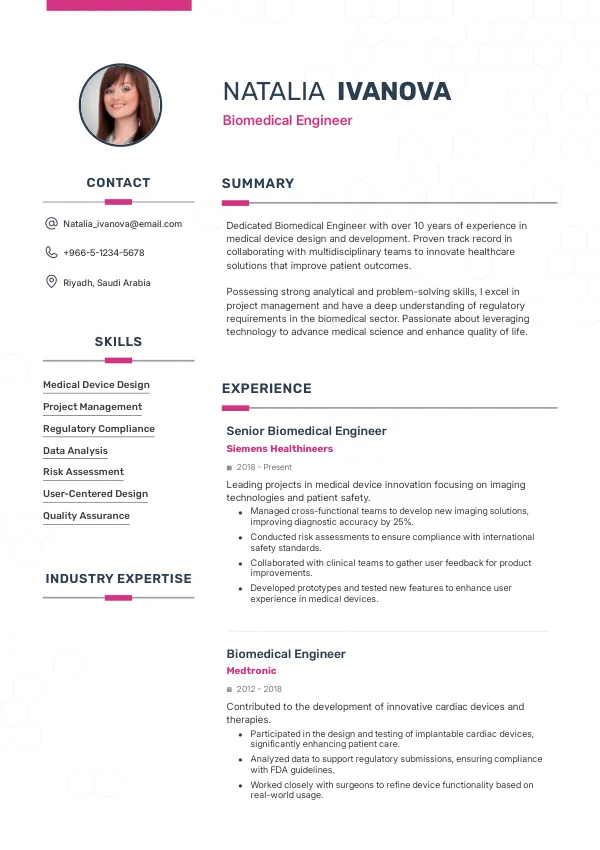
Biomedical engineers play a crucial role in the healthcare sector, particularly in Saudi Arabia's growing medical technology industry. However, many candidates struggle to secure interviews due to common resume mistakes. These errors often go unnoticed, leading to repeated rejections. It's essential to review your resume early to avoid these pitfalls and increase your chances of interview success.
How Recruiters Evaluate Resumes
In Saudi Arabia, recruiters and hiring managers closely examine resumes for the Biomedical Engineer role. They look for clarity, relevance, and specific keywords that align with job descriptions. Unfortunately, many candidates are dismissed for mistakes they may not recognize without an external review. A professional evaluation can reveal hidden errors that might be costing you opportunities.
Expert insights can uncover hidden mistakes in your resume.
Review NowCommon Resume Mistakes
Mistake #1 – Poor Formatting
Why this hurts
Inconsistent formatting can make your resume difficult to read. Recruiters want a clear and professional presentation.
Example
- Bad: Mixed font sizes and styles.
- Better: Consistent use of headings, bullet points, and font.
How to fix
- Use a single font throughout and maintain consistent heading styles.
Mistake #2 – Lack of Keywords
Why this hurts
Not including relevant keywords can lead to rejection by ATS systems. Recruiters often use these keywords to find suitable candidates.
Example
- Bad: Describing past roles without industry-specific terms.
- Better: Using terms like “biomedical device design” or “regulatory compliance.”
How to fix
- Analyze job descriptions and include relevant keywords in your resume.
Mistake #3 – Vague Job Descriptions
Why this hurts
Vague descriptions fail to demonstrate your impact and achievements. Recruiters need clear evidence of your contributions.
Example
- Bad: “Worked on medical devices.”
- Better: “Led a team to develop a new heart monitor, reducing patient readmission rates by 20%.”
How to fix
- Quantify your achievements and be specific about your role and impact.
Mistake #4 – Neglecting Soft Skills
Why this hurts
Biomedical engineers require both technical and soft skills. Ignoring soft skills can make your resume less appealing.
Example
- Bad: “Good at teamwork.”
- Better: “Collaborated with multidisciplinary teams to enhance product development.”
How to fix
- Include soft skills that are relevant to the job and provide examples.
Mistake #5 – Ignoring Local Industry Trends
Why this hurts
Not aligning your resume with local industry trends can make it seem outdated. Recruiters prefer candidates who are aware of current developments.
Example
- Bad: Focusing solely on international standards.
- Better: Discussing local projects and initiatives.
How to fix
- Research local innovations in biomedical engineering to include relevant details.
Mistake #6 – Overloading with Technical Jargon
Why this hurts
Using excessive technical jargon can confuse recruiters. They may not have the technical background to understand your qualifications.
Example
- Bad: “Utilized advanced algorithms for signal processing.”
- Better: “Applied data analysis techniques to improve device functionality.”
How to fix
- Use clear language to describe technical skills and accomplishments.
Mistake #7 – Incomplete Education Section
Why this hurts
Failing to list relevant certifications or degrees can diminish your qualifications. Recruiters need to see your educational background clearly.
Example
- Bad: “Bachelor's in Engineering.”
- Better: “Bachelor of Science in Biomedical Engineering, University of XYZ, 2021.”
How to fix
- Detail your education, including relevant coursework, honors, and certifications.
Mistake #8 – Focusing on Duties Rather Than Achievements
Why this hurts
Resumes that list only job duties fail to showcase what you’ve accomplished. Recruiters want to see results.
Example
- Bad: “Responsible for managing projects.”
- Better: “Successfully managed projects that increased efficiency by 30%.”
How to fix
- Highlight achievements and use metrics to illustrate your success.

Common ATS Mistakes
Many resumes encounter issues with ATS systems, which can misinterpret formatting or fail to parse critical information. For instance, using unusual file formats or graphics can lead to rejection. Additionally, if your resume lacks relevant keywords, it may not even reach a human recruiter. These errors are often difficult to self-diagnose without an automated review or professional insight. Utilizing a service like mistakes.cv can help identify and rectify these ATS-related mistakes.
Mistakes by Experience Level
Entry-Level
Entry-level biomedical engineers often fail to highlight relevant internships or projects, which can be crucial for demonstrating practical experience. It's essential to focus on academic projects that showcase your skills and contributions.
Mid-Level
Mid-level candidates should emphasize leadership roles and project management experience. Failing to demonstrate how you've advanced can hinder your chances of being considered for senior roles.
Senior/Lead
Senior professionals must convey strategic impact and innovation. Common mistakes include vague descriptions of leadership roles or neglecting to showcase your influence on company direction.
Enhance your resume's effectiveness with professional help.
Get HelpQuick Checklist for Your Resume
- Ensure consistent formatting throughout your resume.
- Include relevant keywords from job descriptions.
- Quantify your achievements with specific metrics.
- Highlight both technical and soft skills.
- Stay updated with local industry trends.
- Avoid excessive jargon; keep it clear.
- Detail your educational background thoroughly.
- Focus on achievements rather than just duties.
- Use a standard file format (PDF or DOCX).
- Review your resume with a professional service for hidden mistakes.
Frequently Asked Questions
What are the key skills needed for a Biomedical Engineer?
Key skills include technical proficiency in biomedical devices, strong problem-solving abilities, and effective communication skills.
How important is ATS compatibility for my resume?
ATS compatibility is crucial as many companies use these systems to filter resumes. An ATS-friendly resume increases your chances of being seen by recruiters.
Should I include every job I've had on my resume?
Focus on relevant experience that aligns with the Biomedical Engineer role. Older or unrelated jobs can clutter your resume.
How can I make my resume stand out?
Use quantifiable achievements, clear formatting, and tailor your resume to specific job descriptions to stand out.
Can a resume review really help me?
Yes, a professional review can highlight mistakes you may not notice and improve your chances of landing interviews.
Take Action Now
Don't let simple mistakes hold you back from your dream job as a Biomedical Engineer. Review your resume today to ensure it's polished and effective. Use mistakes.cv to get professional insights and recommendations that can significantly enhance your application.
Start your journey to a successful application by checking your resume now!

 UAE
UAE Qatar
Qatar Saudi Arabia
 South Africa
 Brazil
 USA
USA Canada
 Australia
 United Kingdom
 New Zealand
 Singapore
 Germany
 France
 Spain
Spain Greece
 Italy
Italy India
India Philippines
 Malaysia
 Indonesia
 South Korea
 Japan
Japan