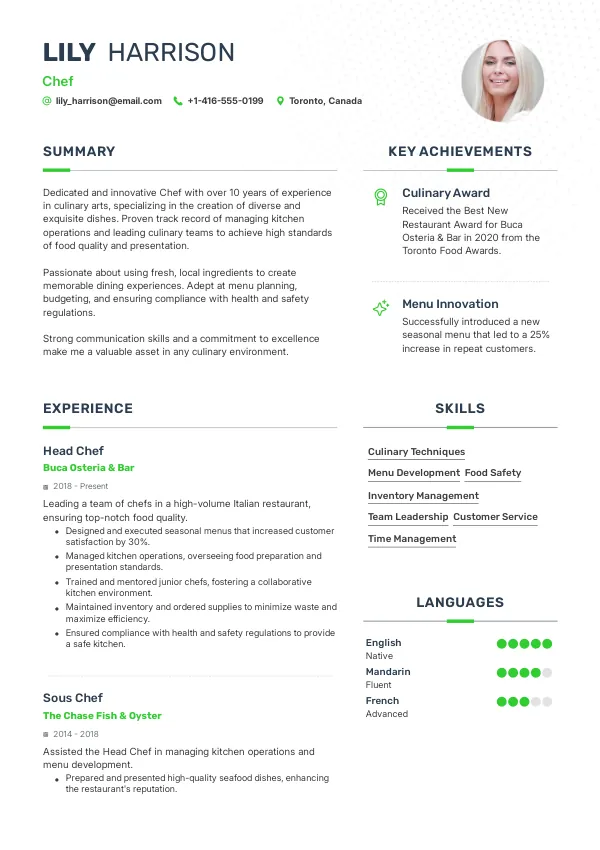
Understanding the Culinary Job Market in Canada
As a chef in Canada, presenting your skills effectively is crucial. Many candidates make resume mistakes that hinder their chances of securing interviews. These errors often stem from a lack of knowledge about what recruiters look for in the culinary field. To enhance your chances, consider reviewing your resume for hidden mistakes that could lead to repeated rejections.
How Recruiters Evaluate Chef Resumes
Recruiters assess chef resumes based on several factors, including relevant experience, culinary skills, and adherence to industry standards. Applicant Tracking Systems (ATS) play a significant role in filtering resumes for keywords and formatting. Many candidates fail to realize that oversights can lead to immediate rejection, often without them noticing. A thorough review of your resume can help identify issues that may not be immediately apparent.
Ensure your resume meets industry standards with a professional review.
Get ReviewedCommon Resume Mistakes for Chefs in Canada
Mistake #1 – Poor Formatting
Why this hurts
Confusing formatting distracts recruiters and can lead to critical information being overlooked. ATS may struggle to parse poorly formatted resumes, resulting in a rejection.
Example
- Bad: Using unconventional fonts and excessive colors.
- Better: A clean, professional layout with standard fonts.
How to fix
- Use a simple font like Arial or Times New Roman.
- Keep formatting consistent and professional.
- Limit the use of colors and graphics.
Mistake #2 – Lack of Relevant Keywords
Why this hurts
Without industry-specific keywords, your resume may not pass through ATS filters. Recruiters look for precise skills that match the job description.
Example
- Bad: "Good at cooking."
- Better: "Expert in French cuisine and pastry preparation."
How to fix
- Include keywords from the job description.
- Highlight specific culinary techniques and skills relevant to the position.
Mistake #3 – Vague Job Descriptions
Why this hurts
Generic descriptions fail to showcase your unique contributions and achievements, making it hard for recruiters to see your value.
Example
- Bad: "Worked as a cook."
- Better: "Developed and executed seasonal menus, increasing customer satisfaction by 30%."
How to fix
- Use quantifiable achievements to demonstrate your impact.
- Tailor descriptions to reflect the specific responsibilities of the role.
Mistake #4 – Not Highlighting Certifications
Why this hurts
Certifications like Food Safety or Culinary Arts diplomas are crucial in the culinary world. Failing to list them can lead to missed opportunities.
Example
- Bad: "Training in culinary arts."
- Better: "Certified in Food Safety and Culinary Arts from XYZ Institute."
How to fix
- Clearly list all relevant certifications and training.
- Position them prominently within your resume.
Mistake #5 – Ignoring Soft Skills
Why this hurts
Chefs need strong communication and teamwork skills. Ignoring these in your resume may lead recruiters to question your fit for team-oriented environments.
Example
- Bad: "Focused on cooking."
- Better: "Collaborated with kitchen staff to enhance team efficiency and meal presentation."
How to fix
- Incorporate soft skills relevant to culinary roles.
- Provide examples of teamwork and communication in your experience.
Mistake #6 – Overloading with Information
Why this hurts
Too much information can overwhelm recruiters and distract from key qualifications. It can also make ATS parsing difficult.
Example
- Bad: Long paragraphs detailing every task performed.
- Better: Concise bullet points highlighting key responsibilities.
How to fix
- Limit your resume to one or two pages.
- Use bullet points for easy readability.
Mistake #7 – Omitting Contact Information
Why this hurts
Not including contact information can lead to missed interview opportunities. Recruiters need to know how to reach you.
Example
- Bad: No phone number or email listed.
- Better: Clear contact details at the top of the resume.
How to fix
- Ensure your contact information is prominently displayed.
- Include a professional email address.
Mistake #8 – Failing to Tailor Your Resume
Why this hurts
Not customizing your resume for each application may signal a lack of interest to recruiters. Tailoring shows effort and understanding of the specific role.
Example
- Bad: Using the same resume for every job.
- Better: Customizing skills and experiences to match the job description.
How to fix
- Adjust your resume for each application.
- Highlight the most relevant experiences and skills.
Common ATS Resume Mistakes
ATS systems are designed to filter resumes based on keywords and formatting. If your resume isn’t optimized for ATS, it could be discarded before a recruiter even sees it. Many candidates are unaware of how ATS functions and may overlook critical details. Without an automated or expert review, it’s challenging to diagnose these issues on your own.
Resume Mistakes by Experience Level
Entry-Level
Entry-level chefs may underestimate the importance of showcasing transferable skills. Highlighting relevant internships, volunteer work, and culinary school projects is essential. Common mistakes include vague descriptions and neglecting to list certifications.
Mid-Level
Mid-level chefs should emphasize leadership roles and achievements. Mistakes often involve not framing experiences in terms of impact or failing to demonstrate growth. It’s crucial to show how past roles prepared you for the next step.
Senior / Lead
Senior or lead chefs are expected to demonstrate strategic vision and management skills. Mistakes in this category include underplaying team leadership roles and not including measurable outcomes. Resumes should reflect a blend of culinary expertise and operational leadership.
Identify hidden mistakes that could hurt your job search.
Check NowQuick Checklist Before Applying
- Ensure consistent formatting throughout the document.
- Include relevant keywords from the job description.
- Quantify achievements and contributions.
- List all certifications and training clearly.
- Incorporate both hard and soft skills.
- Limit the resume to one or two pages.
- Display contact information prominently.
- Tailor the resume for each application.
- Use bullet points for easy readability.
- Review for grammatical and spelling errors.
Frequently Asked Questions
What should I include in my chef resume?
Include relevant experience, culinary skills, certifications, and measurable achievements.
How long should a chef resume be?
A chef resume should ideally be one to two pages long, depending on experience.
Should I list my culinary school on my resume?
Yes, especially if you recently graduated or the training is relevant to the position.
How can I make my resume stand out?
Highlight unique culinary skills, tailor your resume for each job, and quantify your achievements.
What common mistakes should I avoid?
Avoid vague descriptions, poor formatting, and failing to include relevant keywords.
Take the Next Step for Your Culinary Career
Ready to improve your chances of landing interviews? Review your resume for common mistakes and ensure it aligns with industry standards. Consider using mistakes.cv to get a professional second opinion and enhance your resume.
Your culinary career deserves the best representation—take action today!

 UAE
UAE Qatar
Qatar Saudi Arabia
 South Africa
 Brazil
 USA
USA Canada
 Australia
 United Kingdom
 New Zealand
 Singapore
 Germany
 France
 Spain
Spain Greece
 Italy
Italy India
India Philippines
 Malaysia
 Indonesia
 South Korea
 Japan
Japan