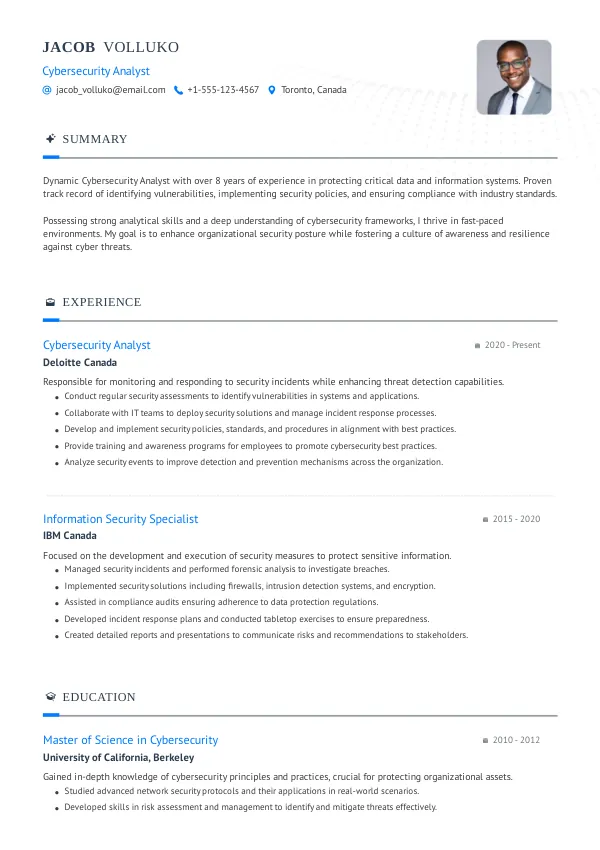
Introduction
In the competitive field of cybersecurity in Canada, a well-crafted resume is crucial for landing interviews. Many applicants overlook common mistakes that can significantly decrease their chances of success. By reviewing your resume or CV for these errors, you can avoid repeated rejections and enhance your prospects.
How Recruiters Evaluate Resumes
Recruiters and ATS systems in Canada assess resumes based on specific criteria relevant to the cybersecurity role. Many candidates do not realize they are being rejected for issues they are unaware of, such as formatting errors or missing keywords. An external review can help identify these hidden mistakes.
Understanding how your resume is evaluated will empower you to make improvements that align with recruiter expectations and ATS requirements.
Review your resume for common mistakes and improve your chances.
Review NowCommon Resume Mistakes for Cybersecurity Analysts
Mistake #1 – Poor Formatting
Why this hurts
Recruiters may find poorly formatted resumes difficult to read, leading to missed information or biases against the candidate.
Example
- Bad: Dense blocks of text without headings.
- Better: Clear sections with headers and bullet points.
How to fix
- Use consistent fonts, sizes, and spacing.
- Organize content into easily navigable sections.
Mistake #2 – Vague Job Descriptions
Why this hurts
Vague descriptions fail to capture your actual skills and experiences, making it hard for recruiters to understand your qualifications.
Example
- Bad: “Responsible for security.”
- Better: “Led a team that reduced security incidents by 30% through implementing new protocols.”
How to fix
- Be specific about your role and achievements.
- Quantify results where possible to showcase impact.
Mistake #3 – Ignoring Relevant Keywords
Why this hurts
ATS systems filter resumes based on keywords. Missing these can lead to automatic rejection.
Example
- Bad: Generic skills like “computer skills.”
- Better: Specific skills like “network security” or “incident response.”
How to fix
- Identify keywords from job postings and incorporate them naturally.
- Use specific terms related to cybersecurity.
Mistake #4 – Lack of Tailoring
Why this hurts
Sending a generic resume fails to demonstrate your interest in a specific role, making you appear unfocused.
Example
- Bad: One-size-fits-all resume.
- Better: Customized resume for each application that highlights relevant experience.
How to fix
- Tailor your resume for each job application.
- Focus on experiences that align with the job description.
Mistake #5 – Overloading with Jargon
Why this hurts
While industry terms can demonstrate expertise, excessive jargon can confuse recruiters who are not technical specialists.
Example
- Bad: Overly technical descriptions without context.
- Better: Clear descriptions with a balance of technical terms and layman explanations.
How to fix
- Use jargon judiciously; explain complex terms.
- Consider your audience when writing your resume.
Mistake #6 – Failing to Highlight Certifications
Why this hurts
Certifications are often a requirement in cybersecurity roles. Neglecting to mention them can diminish your credibility.
Example
- Bad: Certifications mentioned in a long list at the bottom.
- Better: Prominently listed certifications in a dedicated section.
How to fix
- Create a separate section for certifications.
- Highlight relevant certifications that match job requirements.
Mistake #7 – Overlooking Soft Skills
Why this hurts
Cybersecurity is not just about technical skills; soft skills are crucial for teamwork and communication.
Example
- Bad: Resume focused solely on technical expertise.
- Better: Balance of technical skills and soft skills like “team collaboration” or “problem-solving.”
How to fix
- Incorporate soft skills throughout your resume.
- Use examples to demonstrate these skills in action.
Mistake #8 – Inconsistent Employment Dates
Why this hurts
Inconsistencies in dates raise red flags for recruiters, suggesting a lack of attention to detail.
Example
- Bad: Employment dates that don’t align.
- Better: Clear, accurate employment history with consistent formatting.
How to fix
- Double-check dates for accuracy.
- Use a consistent format throughout your resume.


ATS-Specific Issues
Many resumes face challenges when parsed by ATS due to incorrect file formats or excessive graphics. These systems may misinterpret your information, leading to filtering out qualified candidates. Common errors include using images for headings or complicated formatting. It’s challenging to self-diagnose these ATS-related issues without a thorough review, which is where mistakes.cv can help you identify potential pitfalls.
Mistakes by Experience Level
Entry-Level
Entry-level candidates often overlook the importance of relevant internships or projects. Highlight any real-world experience, even if unpaid, to demonstrate practical skills.
Mid-Level
Mid-level professionals should focus on showcasing leadership roles and quantifiable achievements. Avoid vague job titles; instead, emphasize specific contributions to projects.
Senior Level
Senior or lead candidates must signal their strategic thinking and mentorship abilities. This can include highlighting team leadership and successful project outcomes.
Identify ATS issues before submitting your application.
Check ATSQuick Checklist for Your Resume
- Ensure consistent formatting and style.
- Use clear and specific job descriptions.
- Incorporate relevant keywords from job postings.
- Tailor your resume for each application.
- Avoid excessive jargon and explain technical terms.
- Highlight certifications prominently.
- Balance technical skills with soft skills.
- Verify the accuracy of employment dates.
- Check for ATS compatibility.
- Consider a professional review to catch hidden mistakes.
Frequently Asked Questions
What is the best format for a cybersecurity analyst resume?
The best format is typically a clean and professional layout with clear headings. Use bullet points to enhance readability.
How important are certifications in Canada for cybersecurity roles?
Certifications are highly valued and often required for cybersecurity positions, highlighting your expertise and commitment to the field.
Should I include my GPA on my resume?
Include your GPA if it is impressive and relevant to the role, especially if you are an entry-level candidate.
How do I make my resume stand out?
Customize your resume for each position, emphasize relevant experience, and use clear metrics to demonstrate your achievements.
Can mistakes.cv really help with my resume?
Yes, mistakes.cv provides expert reviews that can help identify hidden mistakes and enhance your resume's effectiveness.
Take Action on Your Resume Today
Don’t let common mistakes hold you back from landing your dream job as a Cybersecurity Analyst. Review your resume today to identify and fix any pitfalls. Consider using mistakes.cv for a professional assessment that can boost your chances of success.
Your next opportunity is just a well-crafted resume away. Start improving yours now!

 UAE
UAE Qatar
Qatar Saudi Arabia
 South Africa
 Brazil
 USA
USA Canada
 Australia
 United Kingdom
 New Zealand
 Singapore
 Germany
 France
 Spain
Spain Greece
 Italy
Italy India
India Philippines
 Malaysia
 Indonesia
 South Korea
 Japan
Japan