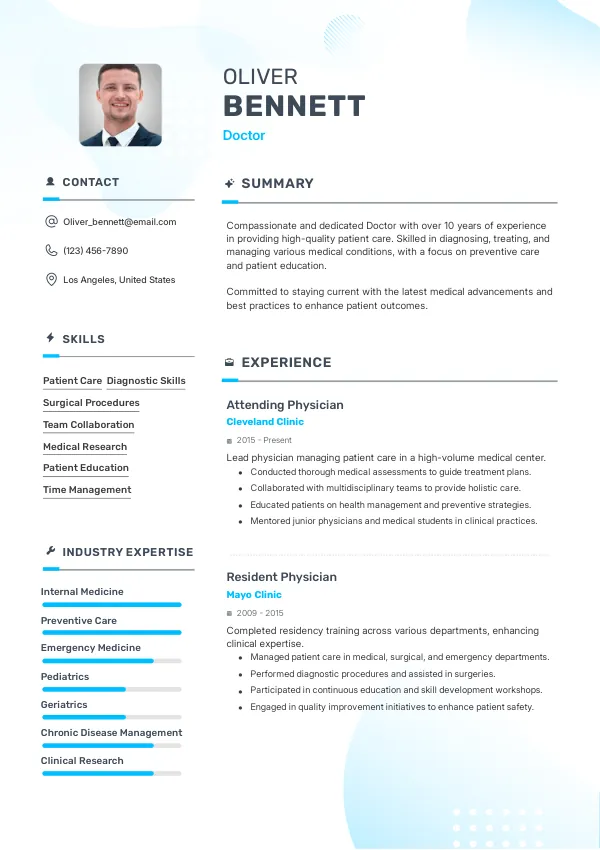
Understanding Doctor Resume Mistakes
As a doctor in the United States, your resume is your first opportunity to impress potential employers. However, many candidates make mistakes that can block their chances of landing interviews. A common error is assuming that a solid medical background is enough; your resume must effectively showcase your qualifications. Before submitting your application, consider reviewing your resume with mistakes.cv to avoid these pitfalls.
How Recruiters Evaluate Medical Resumes
Recruiters and hiring managers look for specific qualifications and experiences when evaluating doctor resumes. They often use Applicant Tracking Systems (ATS) to filter candidates based on keyword relevance and formatting. Many applicants are rejected due to easily fixable issues that they might not notice without an external review. A professional evaluation, like those offered at mistakes.cv, can help identify these hidden mistakes.
Understanding what recruiters prioritize can significantly enhance your chances of being shortlisted.
Get expert insights to enhance your resume and improve your job prospects.
Review NowCommon Resume Mistakes for Doctors
Mistake #1 – Poor Formatting
Why this hurts
Many resumes lack a clean, professional layout, making them hard to read. Recruiters may quickly dismiss resumes that appear cluttered.
Example
- Bad: Dense paragraphs without clear headings.
- Better: Clean sections with headers and bullet points.
How to fix
- Use consistent formatting, with clear sections and bullet points to enhance readability.
Mistake #2 – Generic Objective Statements
Why this hurts
Generic objectives fail to showcase your unique qualifications and intentions, leading to a lack of interest from recruiters.
Example
- Bad: "Seeking a position in a hospital."
- Better: "Compassionate physician with 5 years in internal medicine seeking to leverage expertise at XYZ Hospital."
How to fix
- Craft a tailored objective that highlights your experience and how you can contribute to the prospective employer.
Mistake #3 – Inconsistent Job Titles
Why this hurts
Inconsistent job titles can confuse ATS and recruiters about your level of experience.
Example
- Bad: Listing "Doctor" in one section and "Physician" in another.
- Better: Use one term consistently throughout your resume.
How to fix
- Choose one title and use it consistently across all sections of your resume.
Mistake #4 – Lack of Quantifiable Achievements
Why this hurts
Not including specific achievements makes it hard for recruiters to gauge your impact.
Example
- Bad: "Responsible for patient care."
- Better: "Managed care for over 100 patients leading to a 20% increase in patient satisfaction scores."
How to fix
- Add metrics and specific outcomes to your experience descriptions.
Mistake #5 – Ignoring Keywords
Why this hurts
Not using relevant keywords makes it difficult for ATS to recognize your qualifications.
Example
- Bad: "Worked with patients."
- Better: "Conducted comprehensive patient assessments and developed tailored treatment plans."
How to fix
- Review job postings and incorporate relevant keywords throughout your resume.
Mistake #6 – Weak Professional Summary
Why this hurts
A vague summary fails to capture your professional identity, which can lead to disinterest.
Example
- Bad: "Doctor with experience."
- Better: "Board-certified physician with 10 years of experience in emergency medicine and a strong focus on patient-centered care."
How to fix
- Develop a compelling professional summary that encapsulates your skills and experiences.
Mistake #7 – Omitting Certifications
Why this hurts
Failing to list certifications can make you seem less qualified than other candidates.
Example
- Bad: Not including board certifications.
- Better: "Board Certified in Internal Medicine, 2022."
How to fix
- Ensure all relevant certifications are prominently displayed in your resume.
Mistake #8 – Lengthy Resumes
Why this hurts
Resumes longer than two pages can overwhelm recruiters and ATS.
Example
- Bad: A three-page resume.
- Better: A concise two-page resume.
How to fix
- Keep your resume to a maximum of two pages, focusing on relevant information.

Common ATS Resume Mistakes
ATS software can misinterpret complex formatting and unconventional file types. Resumes that include images, tables, or unusual fonts may not parse correctly, resulting in rejection. This is often hard to diagnose without an ATS review. To ensure your resume meets ATS standards, consider using mistakes.cv for an automated check.
Resume Mistakes by Experience Level
Entry-Level
Entry-level doctors often overlook essential skills and internships. Highlighting relevant clinical rotations and volunteer work can set you apart.
Mid-Level
Mid-level physicians should focus on leadership roles and specific achievements. Clearly outline your contributions to team successes and patient outcomes.
Senior
Senior doctors must emphasize their management experience and strategic initiatives. Avoid vague language and demonstrate how your leadership has improved departmental efficiency.
Identify hidden mistakes with an ATS check to improve your application.
Check ATSQuick Checklist for Doctor Resumes
- Use a clean, professional format.
- Tailor your objective statement to each application.
- Be consistent with job titles.
- Include quantifiable achievements.
- Incorporate relevant keywords from job postings.
- Write a compelling professional summary.
- List all relevant certifications.
- Limit your resume to two pages.
- Ensure compatibility with ATS.
- Consider a professional review with mistakes.cv.
FAQs for Doctors
What should I include in my doctor resume?
Include relevant clinical experiences, education, board certifications, and skills that match the job description.
How long should a doctor resume be?
Ideally, your resume should be no longer than two pages to maintain clarity and focus.
What are common resume pitfalls for doctors?
Common pitfalls include poor formatting, lack of achievements, and failing to use relevant keywords.
How can I improve my resume quickly?
Review your resume for clarity, tailor it for each job, and consider an expert review at mistakes.cv.
Why is ATS compatibility important?
ATS compatibility ensures your resume is properly parsed and can be reviewed by recruiters, increasing your chances of getting noticed.
Take Action Now
Don't let small mistakes prevent you from advancing your medical career. Review your resume today to ensure it meets the expectations of recruiters and ATS systems.
For a thorough evaluation, consider using mistakes.cv to identify any hidden issues and enhance your chances of landing that interview.

 UAE
UAE Qatar
Qatar Saudi Arabia
 South Africa
 Brazil
 USA
USA Canada
 Australia
 United Kingdom
 New Zealand
 Singapore
 Germany
 France
 Spain
Spain Greece
 Italy
Italy India
India Philippines
 Malaysia
 Indonesia
 South Korea
 Japan
Japan