Introduction
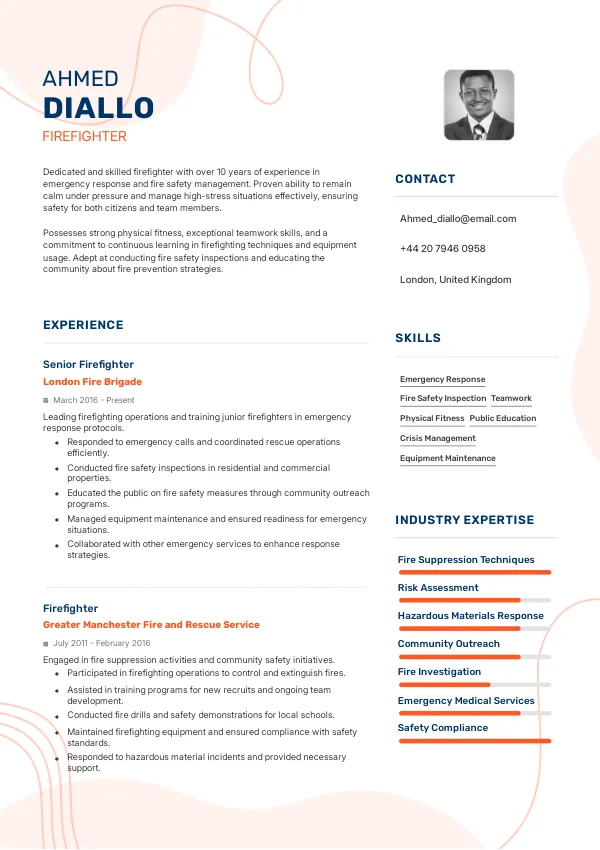
In the competitive field of firefighting, your CV plays a crucial role in landing interviews. Many candidates overlook simple mistakes that can lead to rejection during the hiring process. Understanding these pitfalls can significantly enhance your chances of securing a position.
By taking the time to review your CV with a keen eye, you can avoid common errors that many applicants make. Consider using mistakes.cv to ensure your document stands out for the right reasons.
How Recruiters Evaluate Firefighter Resumes
Recruiters and hiring managers for firefighter positions in the UK often rely on both ATS systems and manual reviews. They look for specific qualifications, skills, and keywords that match the job description. Unfortunately, many candidates are unaware of the subtle errors that can lead to their CVs being overlooked.
Without an external review, you might miss these issues, which is why it’s essential to have a fresh perspective on your CV. A service like mistakes.cv can help identify hidden mistakes you may not notice.
Ensure your CV is error-free and ATS-compatible.
Get StartedCommon Firefighter Resume Mistakes
Mistake #1 – Poor Formatting
Why this hurts
Inconsistent formatting can make your CV difficult to read and may frustrate recruiters. They prefer a clear, organized layout that highlights your skills and experience.
Example
- Bad: Mixed font sizes and styles throughout the document.
- Better: A uniform font size and style with appropriate headings and bullet points.
How to fix
- Choose a professional font and maintain consistent formatting throughout your CV.
- Use bullet points for easy reading and clear sections.
Mistake #2 – Irrelevant Information
Why this hurts
Including irrelevant experience or personal details can detract from your qualifications for a firefighter role. Recruiters want to see information directly related to the job.
Example
- Bad: Listing unrelated work experience or hobbies.
- Better: Focusing on skills and experiences that demonstrate your firefighting capabilities.
How to fix
- Tailor your CV to highlight relevant experience and skills for the firefighting role.
- Remove unrelated information to keep the focus sharp.
Mistake #3 – Lack of Keywords
Why this hurts
ATS systems scan for specific keywords that match job postings. Missing these keywords can lead to automatic rejection.
Example
- Bad: Using generic terms like “team player” instead of specific skills like “fire safety training.”
- Better: Incorporating job-specific keywords and phrases found in the job description.
How to fix
- Study job descriptions and include relevant keywords in your CV.
- Focus on the most important qualifications for the role.
Mistake #4 – Vague Job Descriptions
Why this hurts
Vague or generic descriptions of your previous roles can leave recruiters with more questions than answers. They need to see specific achievements and responsibilities.
Example
- Bad: “Responsible for firefighting duties.”
- Better: “Led a team of five during emergency response, successfully reducing response time by 20%.”
How to fix
- Be specific about your responsibilities and achievements in each role.
- Quantify your successes to provide context.
Mistake #5 – Ignoring Soft Skills
Why this hurts
Soft skills like communication and teamwork are essential for firefighters. Neglecting to mention them can make your CV less compelling.
Example
- Bad: “I work well with others.”
- Better: “Collaborated effectively with emergency services to coordinate rescue operations.”
How to fix
- Highlight soft skills through concrete examples of your teamwork and communication.
Mistake #6 – Inconsistent Experience Framing
Why this hurts
Inconsistent verb tenses or framing can confuse recruiters about your current status and past roles.
Example
- Bad: “Managed a team” for current role and “Manage a team” for previous role.
- Better: Use past tense for previous roles and present tense for your current position.
How to fix
- Ensure tense consistency throughout your CV to clearly communicate your experience.
Mistake #7 – Overlooking Qualifications
Why this hurts
Firefighting requires specific qualifications that must be evident on your CV. Failing to highlight them can cost you an opportunity.
Example
- Bad: “Completed training.”
- Better: “Completed Firefighter Level 3 Training with distinction.”
How to fix
- Clearly list all relevant qualifications, certifications, and training.
Mistake #8 – Not Customizing Your CV
Why this hurts
A generic CV makes it difficult for recruiters to see why you’re a good fit for the specific role. Customisation is key.
Example
- Bad: Sending the same CV for every application.
- Better: Tailoring your CV for each specific firefighter position applied for.
How to fix
- Adapt your CV to align with the job description and highlight relevant experience.

Common ATS-Related Mistakes
ATS systems can misinterpret your CV if it’s not formatted correctly. Issues such as using unusual file types, excessive graphics, or complex layouts can lead to parsing errors.
Many candidates are unaware of these ATS-related issues and may struggle to identify them without a professional review. Using mistakes.cv can help ensure your CV meets ATS standards.
Mistakes by Experience Level
Entry-Level
Entry-level candidates often fail to highlight their relevant skills or experience. Emphasizing any volunteer work or training is crucial. Avoid vague language and focus on what you can bring to the team.
Mid-Level
Mid-level applicants may overlook quantifying achievements. Clearly stating how your contributions improved outcomes is vital. Ensure you demonstrate leadership skills as well.
Senior/Lead
Senior candidates should avoid generic statements about management. Instead, focus on strategic achievements and how your leadership has made a significant impact within previous roles.
Maximize your chances with a professional review.
Review NowQuick Checklist Before Applying
- Ensure consistent formatting throughout your CV.
- Highlight relevant experience and qualifications.
- Include keywords from the job description.
- Be specific about your achievements.
- Highlight both soft and hard skills.
- Maintain tense consistency.
- Tailor your CV for each application.
- Use a standard file type (e.g., PDF or DOCX).
- Remove unnecessary personal details.
- Check for spelling and grammatical errors.
Frequently Asked Questions
What should I include in my firefighter CV?
Include your qualifications, relevant experience, and soft skills that demonstrate teamwork and leadership.
How long should my CV be?
Your CV should ideally be two pages long, focusing on the most relevant information.
How can I make my CV stand out?
Customize your CV for each application and ensure it highlights your unique skills and achievements.
What common mistakes should I avoid?
Avoid poor formatting, irrelevant information, and vague job descriptions that may confuse recruiters.
How can mistakes.cv help me?
Mistakes.cv can provide a professional review of your CV, identifying hidden errors and optimizing it for ATS.
Take Action to Improve Your CV
Your CV is your first impression in the firefighting job market. Take the time to review it for the common mistakes listed here.
Consider using mistakes.cv for a professional review that can enhance your CV and increase your chances of landing interviews.

 UAE
UAE Qatar
Qatar Saudi Arabia
 South Africa
 Brazil
 USA
USA Canada
 Australia
 United Kingdom
 New Zealand
 Singapore
 Germany
 France
 Spain
Spain Greece
 Italy
Italy India
India Philippines
 Malaysia
 Indonesia
 South Korea
 Japan
Japan