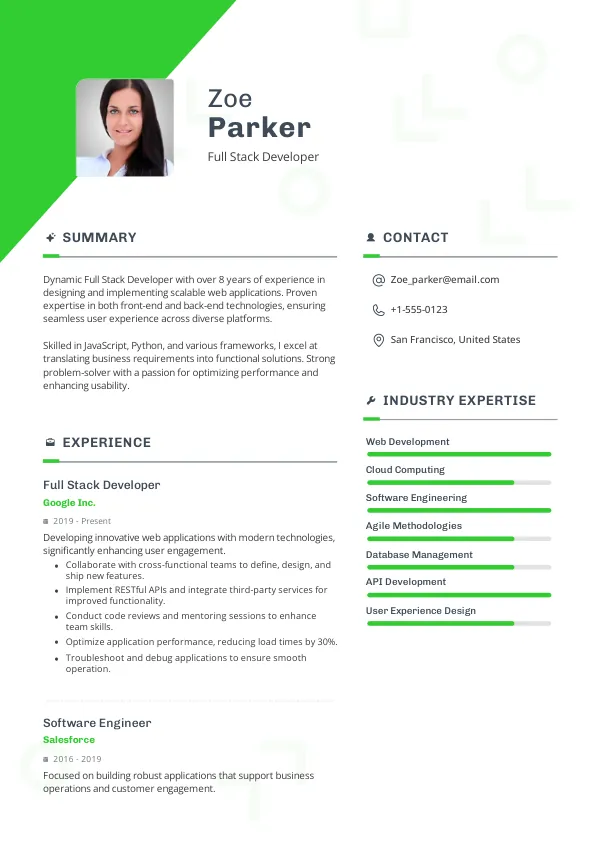
Introduction to Full Stack Developer Resumes
As a Full Stack Developer, your resume is your first impression in a competitive job market. Many applicants face rejection due to simple mistakes that can easily be avoided. Understanding these common pitfalls can help you craft a more effective resume and increase your chances of landing interviews.
Before submitting your application, it's wise to review your resume using services like mistakes.cv to catch any hidden errors that could hinder your success.
How Recruiters Evaluate Full Stack Developer Resumes
Recruiters and ATS systems assess resumes based on keyword relevance, formatting, and content structure. A well-optimized resume highlights your skills and experiences effectively, making it easier for hiring managers to see your potential. Unfortunately, many candidates overlook issues that lead to their rejection.
Without an external review, you might miss critical mistakes that could hinder your chances. Consider a professional resume assessment to identify these issues early on.
Identify and fix your resume mistakes to land more interviews.
Get HelpCommon Resume Mistakes for Full Stack Developers
Mistake #1 – Poor Formatting
Why this hurts
Inconsistent formatting can make your resume appear unprofessional. Recruiters may dismiss resumes that are difficult to read.
Example
- Bad: Using multiple fonts and sizes.
- Better: Consistent use of one font style and size throughout.
How to fix
- Choose a single, professional font and stick to it throughout your resume.
Mistake #2 – Lack of Keywords
Why this hurts
ATS systems filter resumes based on keywords. If your resume lacks relevant technical terms, it may not make it past the initial screening.
Example
- Bad: "Worked on web applications."
- Better: "Developed responsive web applications using React and Node.js."
How to fix
- Research job descriptions and incorporate relevant keywords throughout your resume.
Mistake #3 – Vague Experience Descriptions
Why this hurts
Vague statements fail to convey your actual contributions and skills. Recruiters want specifics.
Example
- Bad: "Involved in project management."
- Better: "Led a team of 5 developers on a project that increased user engagement by 30%."
How to fix
- Use quantifiable achievements and specific examples to demonstrate your impact.
Mistake #4 – Ignoring the Summary Section
Why this hurts
A weak summary can lose the interest of recruiters who scan resumes quickly. It’s your chance to make a strong first impression.
Example
- Bad: "I am a Full Stack Developer."
- Better: "Detail-oriented Full Stack Developer with 5 years of experience in building high-quality web applications."
How to fix
- Craft a compelling summary that highlights your key skills and experiences relevant to the job.
Mistake #5 – Not Tailoring Your Resume
Why this hurts
Using a generic resume will not address the specific requirements of the job, reducing your chances of getting noticed.
Example
- Bad: Sending the same resume to every job.
- Better: Customizing your resume for each application to reflect the job requirements and company culture.
How to fix
- Adjust your resume for each job application based on the job description.
Mistake #6 – Overloading with Technical Jargon
Why this hurts
While technical skills are important, overloading your resume with jargon can confuse recruiters who may not be familiar with all terms.
Example
- Bad: "Implemented Agile methodologies and CI/CD pipelines."
- Better: "Used Agile practices to streamline development processes, improving project delivery times."
How to fix
- Balance technical language with clear, understandable descriptions of your skills and projects.
Mistake #7 – Omitting Soft Skills
Why this hurts
Technical skills are crucial, but soft skills like communication and teamwork are equally valued by employers.
Example
- Bad: "Focused only on coding."
- Better: "Collaborated with cross-functional teams to enhance product features and user experience."
How to fix
- Include soft skills in your experience descriptions to show your well-rounded abilities.
Mistake #8 – Not Including Relevant Projects
Why this hurts
Not showcasing relevant projects can make it hard for recruiters to gauge your practical skills and experience.
Example
- Bad: "No projects listed."
- Better: "Developed an e-commerce platform that increased sales by 50% within 6 months."
How to fix
- Add a dedicated section for relevant projects, including descriptions and outcomes.
ATS-Specific Resume Issues
ATS systems often struggle with unusual file types or improper formatting. Resumes that include graphics or non-standard fonts may not be parsed correctly, leading to missing information. Additionally, if you don’t use the right keywords, the system may filter you out entirely.
These issues are hard to diagnose without a professional review. Consider using mistakes.cv to ensure your resume meets ATS requirements and to identify any hidden errors.
Resume Mistakes by Experience Level
Entry-Level
Entry-level candidates often struggle with demonstrating relevant skills due to limited experience. Generic resumes and lack of project descriptions can hinder their chances.
Mid-Level
Mid-level candidates should focus on showcasing leadership experiences and quantifiable results. Omitting these details can make them appear less qualified.
Senior/Lead
Senior candidates must emphasize strategic accomplishments and vision. Failing to highlight these aspects may lead recruiters to overlook their potential contributions.
Ensure your resume is ATS-friendly to increase visibility.
Check NowQuick Checklist for Your Resume
- Ensure consistent formatting throughout.
- Incorporate relevant keywords from job descriptions.
- Use quantifiable achievements in experience descriptions.
- Craft a strong, tailored summary.
- Avoid excessive jargon; keep descriptions clear.
- Highlight both technical and soft skills.
- Include relevant projects with outcomes.
- Check for ATS compatibility by using standard file formats.
- Proofread for grammar and spelling errors.
- Seek feedback or a professional review.
FAQs for Full Stack Developers
What should I include in my Full Stack Developer resume?
Include technical skills, projects, relevant work experience, and a strong summary that highlights your expertise.
How can I make my resume stand out to recruiters?
Tailor your resume to each job application, use clear formatting, and emphasize quantifiable achievements.
What if I have gaps in my employment history?
Focus on relevant skills and experiences, and consider including freelance or project work to fill gaps.
How can I optimize my resume for ATS?
Use standard fonts, avoid graphics, and include relevant keywords from the job description.
Is it necessary to have a professional resume review?
A professional review can help you catch hidden mistakes and improve your chances of getting noticed by recruiters.
Take Action to Improve Your Resume Today
Take the time to fix and improve your resume, and increase your chances of landing your dream Full Stack Developer position.

 UAE
UAE Qatar
Qatar Saudi Arabia
 South Africa
 Brazil
 USA
USA Canada
 Australia
 United Kingdom
 New Zealand
 Singapore
 Germany
 France
 Spain
Spain Greece
 Italy
Italy India
India Philippines
 Malaysia
 Indonesia
 South Korea
 Japan
Japan