Introduction
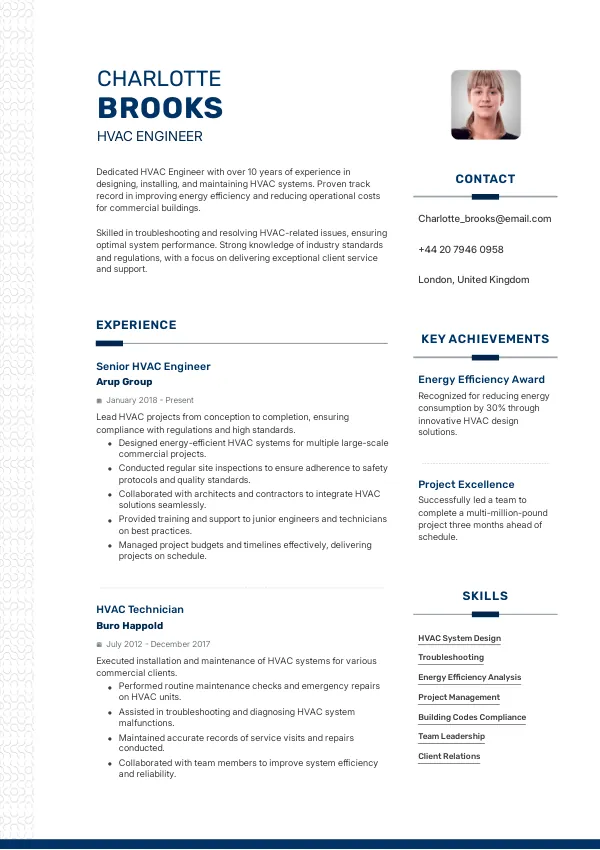
The role of an HVAC Engineer or Technician in the UK is crucial for maintaining efficient heating and cooling systems. However, many applicants make common CV mistakes that block their chances of landing interviews. It's essential to present a polished CV that meets both recruiter expectations and ATS standards. Consider checking your CV now to ensure you avoid these pitfalls and increase your chances of success.
How Recruiters Evaluate Your CV
UK recruiters often face a high volume of applications for HVAC positions. They utilize Applicant Tracking Systems (ATS) to filter resumes based on keywords and formatting. Many candidates miss out on opportunities due to unnoticed errors in their CVs. An external review can help identify these issues before you apply.
Understanding how your CV is assessed can significantly improve your chances. Ensure that your CV is tailored to the job description and reflects relevant skills and experiences.
Ensure your CV stands out with expert insights.
Get HelpCommon CV Mistakes for HVAC Engineers
Mistake #1 – Poor Formatting
Why this hurts
Recruiters quickly lose interest if your CV is cluttered or unprofessional. It can also confuse ATS systems, leading to misinterpretation of your qualifications.
Example
- Bad: A CV with varied fonts and sizes.
- Better: A clean, consistent format with clear headings.
How to fix
- Use a single, professional font and consistent formatting throughout.
- Keep margins uniform and ensure sufficient white space for readability.
Mistake #2 – Generic Objective Statements
Why this hurts
Generic statements fail to capture a recruiter's attention. They don’t indicate how you can add value to the company.
Example
- Bad: “I want to work in a challenging environment.”
- Better: “Seeking to leverage 5+ years of HVAC experience to improve energy efficiency at [Company Name].”
How to fix
- Craft tailored objective statements for each position, highlighting specific skills and achievements.
Mistake #3 – Lack of Relevant Keywords
Why this hurts
Without the right keywords, your CV may not pass ATS screenings, leading to automatic rejection.
Example
- Bad: “I am experienced in various HVAC tasks.”
- Better: “Certified in HVAC system installation, maintenance, and energy auditing.”
How to fix
- Review job descriptions for keywords and incorporate them naturally into your CV.
Mistake #4 – Overloading with Technical Jargon
Why this hurts
Using too much jargon may alienate recruiters who are not technical experts. They might overlook your qualifications.
Example
- Bad: “Expert in refrigerant management and psychrometrics.”
- Better: “Skilled in managing refrigerants and optimizing indoor air quality.”
How to fix
- Balance technical terms with layman's language to ensure clarity for all readers.
Mistake #5 – Inconsistent Employment Dates
Why this hurts
Inconsistencies can raise red flags, suggesting a lack of attention to detail or honesty.
Example
- Bad: “Worked from Jan 2020 to March 2021” followed by “2021 - 2022.”
- Better: “Jan 2020 – March 2021” followed by “April 2021 – Dec 2022.”
How to fix
- Ensure all dates are formatted consistently and accurately reflect your employment history.
Mistake #6 – Failing to Quantify Achievements
Why this hurts
Vague claims don’t convey the impact of your work, making it harder for recruiters to gauge your abilities.
Example
- Bad: “Improved system efficiency.”
- Better: “Increased HVAC system efficiency by 20%, reducing energy costs by £2,000 annually.”
How to fix
- Use specific metrics to illustrate your achievements and contributions clearly.
Mistake #7 – Ignoring Soft Skills
Why this hurts
Technical skills are crucial, but soft skills like communication and teamwork are equally important for HVAC roles.
Example
- Bad: “I have technical skills.”
- Better: “Excellent at collaborating with clients to determine HVAC solutions.”
How to fix
- Highlight relevant soft skills alongside technical expertise.
Mistake #8 – Not Customizing the CV for Each Application
Why this hurts
Failing to tailor your CV can make you seem uninterested or uninvested in the specific role.
Example
- Bad: Using the same CV for every application.
- Better: Tailoring your CV to reflect the specific job description and company values.
How to fix
- Adjust your CV for each position, focusing on relevant experiences and skills.
Common ATS-related Mistakes
ATS systems are designed to filter CVs based on specific criteria, which can lead to unintentional rejections. Common issues include improper file formats, excessive graphics, and lack of keyword optimization. These errors are often overlooked by candidates. It's advisable to have your CV checked by an expert or an automated tool to ensure it meets ATS requirements.
Mistakes by Experience Level
Entry-Level
Entry-level HVAC candidates often struggle with a lack of relevant experience. They may also neglect to highlight internships or relevant coursework that can demonstrate their potential.
Mid-Level
Mid-level professionals should focus on showcasing leadership roles and project management experience. They often fail to quantify achievements effectively.
Senior/Lead
Senior candidates need to emphasize strategic contributions and industry leadership. They may overlook showcasing their mentoring roles and influence on team performance.
Identify hidden issues in your CV before applying.
Review NowQuick Checklist Before Applying
- Ensure consistent formatting and clear headings.
- Use a tailored objective statement.
- Incorporate relevant keywords from the job description.
- Quantify your achievements with specific metrics.
- Highlight both technical and soft skills.
- Check for consistent employment dates.
- Avoid excessive jargon; maintain clarity.
- Customize your CV for each application.
- Save your CV in a compatible format (PDF or DOCX).
- Review for typos and grammatical errors.
Frequently Asked Questions
What qualifications do I need for HVAC roles in the UK?
A relevant degree or vocational qualification in HVAC or mechanical engineering is typically required.
How should I format my HVAC CV?
Use a clean, professional layout with clear headings and bullet points for easy readability.
What are common skills HVAC employers look for?
Employers seek both technical skills (installation, repair) and soft skills (communication, teamwork).
How can I improve my CV for ATS?
Incorporate job-specific keywords and avoid complex formatting that ATS might misinterpret.
Is it worth getting a CV review?
Absolutely. A professional review can identify hidden mistakes that may be costing you interviews.
Take Action on Your CV Today
Don't let your CV mistakes stand in the way of your HVAC career. Take the next step and review your CV using mistakes.cv. A professional second opinion can help you uncover hidden issues and enhance your chances of landing an interview.
Start improving your CV today and boost your chances of success in the competitive HVAC job market.

 UAE
UAE Qatar
Qatar Saudi Arabia
 South Africa
 Brazil
 USA
USA Canada
 Australia
 United Kingdom
 New Zealand
 Singapore
 Germany
 France
 Spain
Spain Greece
 Italy
Italy India
India Philippines
 Malaysia
 Indonesia
 South Korea
 Japan
Japan