Introduction
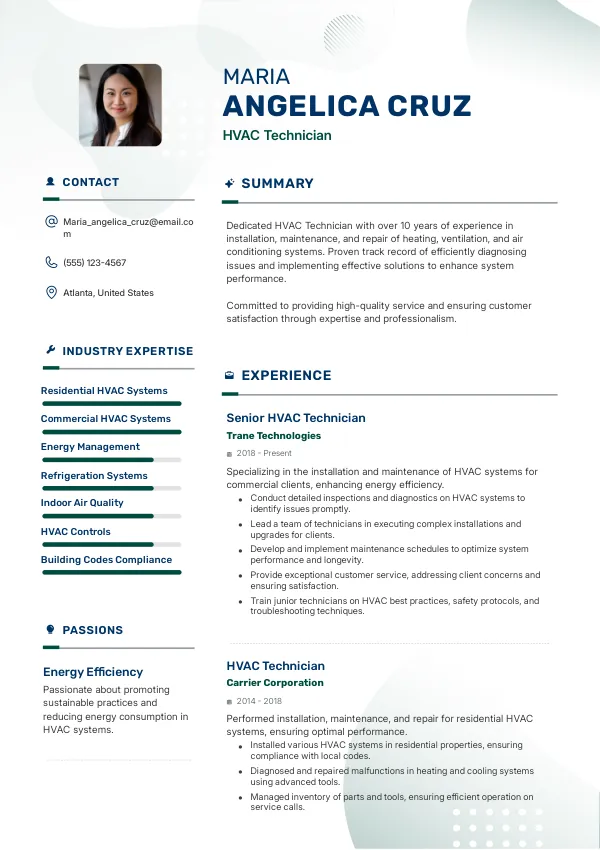
The HVAC technician role is critical in maintaining indoor comfort and safety. However, many candidates fall short in their resume submissions due to common mistakes that diminish their chances of landing interviews. Avoiding these pitfalls is vital for standing out in a competitive job market. It's wise to check your resume early on to prevent repeated rejections and missed opportunities.
How Recruiters Evaluate HVAC Technician Resumes
Recruiters and ATS systems screen resumes for specific qualifications and keywords relevant to HVAC technician roles. Many candidates are unaware of the subtle issues in their resumes that lead to rejection. An external review can help identify these hidden mistakes, ensuring your application gets the attention it deserves.
Understanding how your resume is assessed can help you tailor it effectively for both human recruiters and automated systems.
Ensure your resume is error-free and impactful.
Review NowCommon Resume Mistakes for HVAC Technicians
Mistake #1 – Poor Formatting
Why this hurts
A cluttered or inconsistent format can make your resume hard to read. Recruiters may overlook your qualifications if they struggle to navigate through your document.
Example
- Bad: Using multiple font styles and sizes.
- Better: Consistent font style and size throughout.
How to fix
- Adopt a clean, professional layout with clear headings.
Mistake #2 – Lack of Relevant Keywords
Why this hurts
Resumes without crucial industry-related keywords may fail to pass ATS screenings. Missing keywords means your resume is less likely to reach a human recruiter.
Example
- Bad: “I fixed HVAC units.”
- Better: “Performed maintenance and repair on HVAC systems, ensuring optimal performance.”
How to fix
- Incorporate specific terminology from the job description into your resume.
Mistake #3 – Vague Job Descriptions
Why this hurts
Providing vague descriptions of your work experience can lead recruiters to question your qualifications. They need concrete examples to assess your fit for the role.
Example
- Bad: “Responsible for HVAC jobs.”
- Better: “Completed over 100 HVAC installations and repairs, enhancing customer satisfaction by 30%.”
How to fix
- Detail your responsibilities and achievements using specific metrics.
Mistake #4 – Ignoring Seniority Signals
Why this hurts
Not signaling your seniority can lead recruiters to misinterpret your level of experience, making it difficult to gauge your suitability for the position.
Example
- Bad: “Worked for XYZ Company.”
- Better: “Lead technician at XYZ Company, overseeing a team of 5.”
How to fix
- Highlight leadership roles and responsibilities clearly in your resume.
Mistake #5 – Typos and Grammatical Errors
Why this hurts
Typos or grammatical mistakes can signal a lack of attention to detail, which is crucial in the HVAC field where precision matters.
Example
- Bad: “I have good experience in HVAC.”
- Better: “I have extensive experience in HVAC installations and maintenance.”
How to fix
- Proofread your resume multiple times and consider using a professional review service.
Mistake #6 – Not Tailoring Your Resume
Why this hurts
Sending the same resume for different positions can dilute your qualifications. Tailored resumes resonate more with recruiters.
Example
- Bad: Generic resume for all HVAC applications.
- Better: Customizing your resume for each job application.
How to fix
- Adjust your resume to match the specific requirements and responsibilities of each position.
Mistake #7 – Overloading with Irrelevant Information
Why this hurts
Including unrelated experiences can distract from your core competencies and confuse recruiters.
Example
- Bad: Listing every job you've ever had.
- Better: Focusing on relevant HVAC experience and skills.
How to fix
- Limit your resume to relevant roles and achievements that highlight your HVAC expertise.
Mistake #8 – Failing to Highlight Certifications
Why this hurts
Certifications are crucial in the HVAC field; neglecting them can lead to missed opportunities.
Example
- Bad: Not mentioning certifications at all.
- Better: “EPA Certified and NATE Certified HVAC Technician.”
How to fix
- Clearly list your certifications and any ongoing training relevant to HVAC.

ATS-Specific Resume Issues
ATS systems often overlook resumes with complicated layouts, non-standard file formats, or unoptimized keywords. Many candidates fail to realize these systems can filter out their applications before they reach a recruiter. Errors related to ATS parsing are challenging to identify without an expert review or automated tools.
Mistakes by Experience Level
Entry-Level
Entry-level candidates often neglect to highlight relevant coursework or internships. It's crucial to showcase any hands-on experience, even if limited, and emphasize eagerness to learn.
Mid-Level
Mid-level candidates should focus on leadership skills and specific project accomplishments. Failing to demonstrate progression in their career can hinder their chances.
Senior / Lead
Senior candidates must clearly outline their management experience and strategic contributions. If they don't signal their seniority adequately, recruiters may see them as less qualified.
Get expert feedback on your resume for better results.
Get FeedbackQuick Checklist for Your HVAC Technician Resume
- Ensure consistent formatting throughout.
- Incorporate relevant keywords from the job description.
- Use clear, detailed descriptions of your experience.
- Highlight your certifications prominently.
- Avoid irrelevant information and focus on HVAC-specific skills.
- Tailor your resume for each application.
- Proofread multiple times to eliminate errors.
- Clearly indicate your level of experience and seniority.
- Keep the layout simple for ATS compatibility.
- Consider a professional review to catch hidden mistakes.
Frequently Asked Questions
What should I include in my HVAC technician resume?
Focus on relevant experience, certifications, and skills specific to HVAC systems and maintenance.
How do I make my resume ATS-friendly?
Use standard formatting, relevant keywords, and avoid complex layouts to ensure your resume is parsed correctly.
Is it necessary to have a professional resume review?
While not mandatory, a professional review can catch mistakes you might overlook and enhance your resume's effectiveness.
How can I highlight my certifications?
List your certifications prominently near the top of your resume to ensure they are easily seen by recruiters.
What if I have little experience?
Emphasize any relevant coursework, internships, or volunteer work related to HVAC to strengthen your application.
Take Action to Improve Your Resume
Start improving your resume today!

 UAE
UAE Qatar
Qatar Saudi Arabia
 South Africa
 Brazil
 USA
USA Canada
 Australia
 United Kingdom
 New Zealand
 Singapore
 Germany
 France
 Spain
Spain Greece
 Italy
Italy India
India Philippines
 Malaysia
 Indonesia
 South Korea
 Japan
Japan