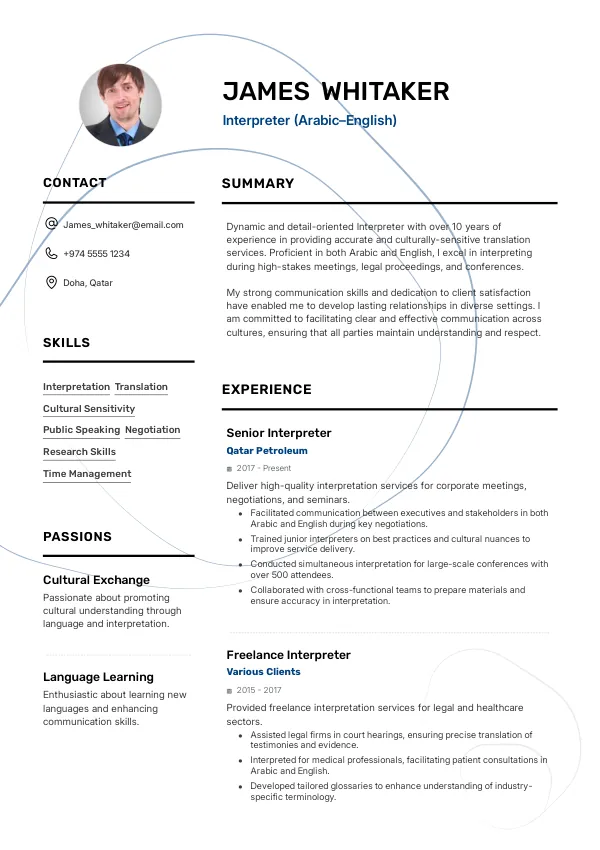
Understanding the Interpreter Role in Qatar
As an interpreter in Qatar, your resume plays a crucial role in your job search. Recruiters look for specific skills and qualifications, but many candidates make common mistakes that hinder their chances of landing interviews. To avoid repeated rejections, it's wise to review your resume or CV for potential pitfalls early in your application process.
How Recruiters Evaluate Your Resume
In Qatar, recruiters often utilize Applicant Tracking Systems (ATS) to filter resumes before they even reach human eyes. These systems look for specific keywords, formatting, and content structure. Many candidates are rejected for issues they may not even notice. A professional review can help you identify these blind spots and enhance your application.
Understanding what recruiters prioritize will help you tailor your resume effectively, ensuring you stand out in the crowded job market.
Get insights from experts to improve your resume today.
Review NowCommon Resume Mistakes for Interpreters
Mistake #1 – Poor Formatting
Why this hurts
Recruiters appreciate clarity and professionalism. A cluttered or inconsistent format can make your resume hard to read, leading to immediate rejections.
Example
- Bad: Using multiple font styles and sizes throughout.
- Better: Consistent use of one font and size.
How to fix
- Choose a clean, professional layout with consistent font styles and sizes.
Mistake #2 – Overly Complex Language
Why this hurts
While your language skills are crucial, using overly complex language can obscure your main points and confuse recruiters.
Example
- Bad: "Utilized extensive linguistic capabilities to facilitate intercommunication."
- Better: "Used language skills to help people communicate effectively."
How to fix
- Use clear and straightforward language to convey your skills and experience.
Mistake #3 – Ignoring Keyword Relevance
Why this hurts
ATS systems scan for specific keywords related to the interpreter role. Missing these can result in immediate disqualification.
Example
- Bad: Listing "communication skills" without context.
- Better: "Fluent in Arabic and English with strong communication skills in both languages."
How to fix
- Incorporate relevant keywords from the job description into your resume.
Mistake #4 – Lack of Relevant Experience
Why this hurts
Not highlighting relevant interpreting experience can make you appear unqualified, even if you have the skills.
Example
- Bad: Listing unrelated jobs without mentioning interpretation.
- Better: "Freelance Arabic-English interpreter for various clients."
How to fix
- Focus on roles that demonstrate your interpreting skills, even if they were freelance or volunteer positions.
Mistake #5 – Not Tailoring Your Resume
Why this hurts
A generic resume fails to show recruiters your suitability for the specific role they are hiring for.
Example
- Bad: Using the same resume for every job application.
- Better: Customizing your resume for each position.
How to fix
- Tailor your resume to reflect the requirements and responsibilities of each job posting.
Mistake #6 – Missing Contact Information
Why this hurts
Omitting your contact information can prevent recruiters from reaching you, effectively ending your application process.
Example
- Bad: No phone number or email listed.
- Better: Clearly stating your phone number and email at the top.
How to fix
- Ensure your contact information is prominent and easy to find.
Mistake #7 – Listing Irrelevant Skills
Why this hurts
Including skills that are not relevant to the interpreter role can dilute your qualifications and confuse recruiters.
Example
- Bad: "Proficient in Microsoft Office."
- Better: "Expert in Arabic-English interpretation and translation."
How to fix
- Focus on skills directly related to interpreting and language proficiency.
Mistake #8 – Not Proofreading
Why this hurts
Typos and grammatical errors can signal a lack of attention to detail, which is critical in interpretation.
Example
- Bad: "I have excellent cominucation skills."
- Better: "I have excellent communication skills."
How to fix
- Thoroughly proofread your resume or have someone review it for mistakes.


ATS-Specific Issues to Avoid
ATS systems have specific requirements that can lead to rejection if not met. Common issues include using unsupported file formats, such as images or complex tables that ATS may not parse correctly. Additionally, keyword stuffing can lead to penalties, making your resume less likely to be seen by recruiters. Many candidates do not realize these issues until they receive feedback. A review from mistakes.cv can help you identify and fix ATS-related errors effectively.
Mistakes Vary by Experience Level
Entry Level
Entry-level interpreters often overlook the importance of internships or volunteer experience. They may also fail to highlight relevant coursework or language certifications. Tailoring these aspects can significantly improve their chances.
Mid Level
Mid-level candidates sometimes list excessive irrelevant experience, diluting the impact of their language skills. They should focus on relevant roles and achievements that showcase their interpreting expertise.
Senior Level
Senior interpreters often neglect to demonstrate leadership or specialized expertise in their resumes. They must clearly outline their seniority and unique skills that set them apart from the competition.
Ensure your resume is ATS-friendly for better results.
Check ATSQuick Checklist for Your Resume
- Ensure consistent formatting throughout your resume.
- Use clear and direct language to describe your skills.
- Incorporate relevant keywords from job descriptions.
- Highlight interpreting experience prominently.
- Tailor your resume for each application.
- List your contact information clearly.
- Focus on relevant skills for the interpreter role.
- Proofread to eliminate typos and errors.
- Ensure the file format is ATS-friendly.
- Review your resume for common mistakes with mistakes.cv.
Frequently Asked Questions
What should I include in my interpreter resume?
Focus on your language skills, relevant experience, and any certifications. Make sure to tailor your resume for the specific job you are applying for.
How can I make my resume stand out in Qatar?
Highlight your unique language skills and relevant experience. Use clear formatting and include keywords relevant to the job description.
What common mistakes should I avoid on my resume?
Avoid poor formatting, irrelevant skills, and typos. Ensure to tailor your resume for each application and include relevant keywords.
Should I include my education in my resume?
Yes, especially if you have relevant qualifications or certifications related to interpreting. Place this information prominently.
How can I check if my resume is ATS-friendly?
Use services like mistakes.cv to review your resume and ensure it meets ATS requirements, helping you avoid hidden issues.
Take Action to Improve Your Resume
Don’t let common resume mistakes hinder your chances of securing an interview as an interpreter in Qatar. Take the first step towards success by reviewing your resume with mistakes.cv. An expert review can help you identify and fix critical issues, ensuring your application stands out.
Start improving your resume today to enhance your chances of landing your dream job in the interpreting field!

 UAE
UAE Qatar
Qatar Saudi Arabia
 South Africa
 Brazil
 USA
USA Canada
 Australia
 United Kingdom
 New Zealand
 Singapore
 Germany
 France
 Spain
Spain Greece
 Italy
Italy India
India Philippines
 Malaysia
 Indonesia
 South Korea
 Japan
Japan