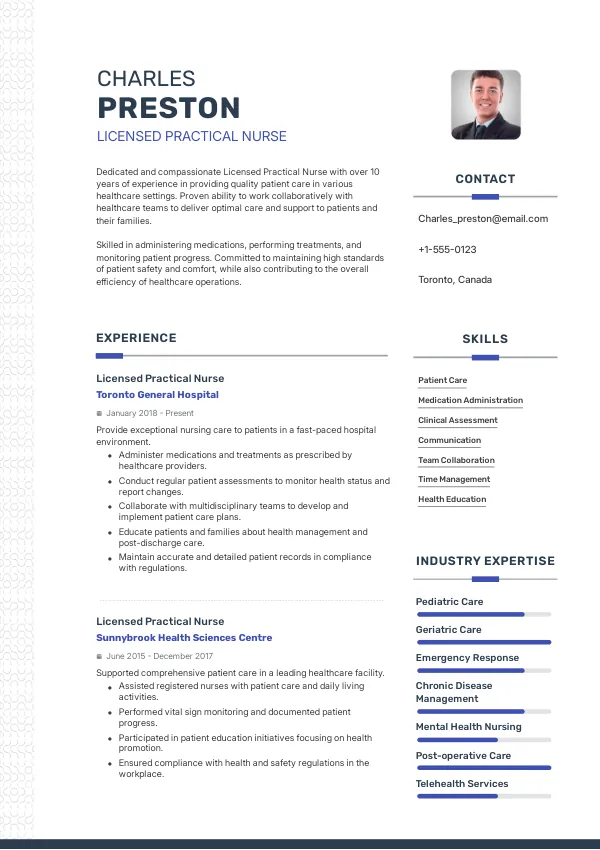
Understanding the Importance of a Strong Resume
As a Licensed Practical Nurse (LPN) in Canada, your resume is a critical tool in securing interviews. Hiring managers often sift through numerous applications, making it essential to stand out. Unfortunately, many candidates unknowingly include mistakes that can hinder their chances of getting noticed. Regularly reviewing your resume with a professional service like mistakes.cv can help identify these pitfalls early on.
How Recruiters Evaluate LPN Resumes
Recruiters often rely on Applicant Tracking Systems (ATS) to screen resumes before they even reach human eyes. These systems evaluate formatting, keyword relevance, and overall structure. Many applicants are rejected for errors they may not even be aware of. Utilizing a service such as mistakes.cv can provide valuable insights into your resume's effectiveness and help you avoid common oversights.
Understanding how your resume is evaluated is key to improving your chances of landing an interview as an LPN in Canada.
Ensure your resume is ready for submission and error-free.
Review NowCommon Resume Mistakes for Licensed Practical Nurses
Mistake #1 – Poor Formatting
Why this hurts
Recruiters appreciate clarity and professionalism. A cluttered or inconsistent format can confuse them and make your resume look unprofessional.
Example
- Bad: Text in different fonts and sizes throughout the resume.
- Better: Consistent font type and size, with clear headings.
How to fix
- Choose one professional font and stick to it throughout your document.
- Use size 10-12 for body text and 14-16 for headings.
Mistake #2 – Lack of Keywords
Why this hurts
Many resumes lack specific keywords that ATS systems look for, leading to automatic rejections. Keywords related to nursing skills and experiences are vital.
Example
- Bad: General statements like 'good communicator.'
- Better: Specific skills like 'patient care, medication administration, and charting.'
How to fix
- Analyze job postings for relevant keywords and incorporate them into your resume.
Mistake #3 – Weak Experience Descriptions
Why this hurts
Vague descriptions do not provide insight into your capabilities. Recruiters want to see tangible results and responsibilities.
Example
- Bad: 'Assisted nurses.'
- Better: 'Assisted RNs with patient assessments and care plans for over 20 patients daily.'
How to fix
- Use action verbs and quantify achievements to provide clear context.
Mistake #4 – Ignoring Local Standards
Why this hurts
Every region has different expectations regarding resume structure and information. Ignoring these can lead to misunderstandings.
Example
- Bad: Including unnecessary personal information, like marital status.
- Better: Focusing on professional qualifications and experiences.
How to fix
- Research Canadian resume standards and align your resume with them.
Mistake #5 – Not Tailoring Your Resume
Why this hurts
Generic resumes fail to connect with the specific role you are applying for. Tailoring your resume shows attention to detail and genuine interest.
Example
- Bad: Using the same resume for every application.
- Better: Customizing your resume to reflect the job description and required skills.
How to fix
- Adjust your resume for each job application, emphasizing relevant experience and skills.
Mistake #6 – Missing Certifications
Why this hurts
Not highlighting your nursing certifications can lead to missed opportunities. Certifications are critical in the nursing field.
Example
- Bad: Listing certifications at the bottom.
- Better: Prominently displaying certifications in a dedicated section.
How to fix
- Ensure all relevant certifications are clearly listed and easily visible.
Mistake #7 – Overly Lengthy Resume
Why this hurts
Long resumes can overwhelm recruiters. They may not take the time to read extensively.
Example
- Bad: A two-page resume.
- Better: A concise one-page resume focused on key achievements.
How to fix
- Limit your resume to one page unless you have extensive relevant experience.
Mistake #8 – Neglecting a Professional Summary
Why this hurts
A lack of a professional summary can leave recruiters wondering about your overall qualifications.
Example
- Bad: Jumping straight into work experience.
- Better: Including a brief summary that highlights your skills and career goals.
How to fix
- Write a 2-3 sentence summary that encapsulates your experience and aspirations.

ATS-Specific Mistakes to Avoid
ATS systems may reject resumes due to improper file formats, such as using PDF files that cannot be parsed correctly. Additionally, overly complex formatting can confuse ATS algorithms, causing them to misread your information.
Many candidates do not realize these issues until they receive no feedback after applying. To ensure your resume is ATS-friendly, consider an automated review through mistakes.cv.
Mistakes by Experience Level
Entry-Level
Entry-level LPNs often make mistakes such as including irrelevant work experience or lacking specific nursing-related keywords. Focus on any clinical placements or volunteer work that showcase your skills.
Mid-Level
Mid-level candidates may overlook emphasizing leadership roles or specific accomplishments. Ensure to highlight how your actions improved patient care or team performance.
Senior / Lead
Senior LPNs should avoid generic descriptions of their previous roles. Instead, focus on strategic contributions and outcomes that demonstrate your leadership capabilities.
Get a second opinion to enhance your resume's impact.
Check ItQuick Checklist for Your LPN Resume
- Ensure consistent formatting throughout your resume.
- Incorporate relevant keywords from job descriptions.
- Provide clear, quantified descriptions of your responsibilities.
- Tailor your resume for each job application.
- Highlight your certifications prominently.
- Limit your resume to one page, if possible.
- Include a concise professional summary.
- Check for any spelling or grammatical errors.
- Use standard file formats like .docx or .txt.
- Review your resume for ATS compatibility before submitting.
Frequently Asked Questions
What should I include in my LPN resume?
Include your contact information, a professional summary, relevant skills, work experience, and certifications.
How long should my resume be?
Generally, a one-page resume is ideal, especially for LPN positions, unless you have extensive relevant experience.
Is it necessary to tailor my resume for each job?
Yes, customizing your resume for each application can significantly improve your chances of getting an interview.
What file format should I use for my resume?
Use .docx or .txt formats for ATS compatibility, avoiding complex layouts when possible.
Can I get help reviewing my resume?
Absolutely! A professional review service like mistakes.cv can help identify and correct hidden mistakes.
Take Action to Improve Your Resume
Your resume is your first chance to make a great impression as a Licensed Practical Nurse. Don't let mistakes hold you back from your dream job.
Consider reviewing your resume with mistakes.cv to ensure it is polished, ATS-friendly, and tailored to your target positions. Start your journey to success today!

 UAE
UAE Qatar
Qatar Saudi Arabia
 South Africa
 Brazil
 USA
USA Canada
 Australia
 United Kingdom
 New Zealand
 Singapore
 Germany
 France
 Spain
Spain Greece
 Italy
Italy India
India Philippines
 Malaysia
 Indonesia
 South Korea
 Japan
Japan