Introduction
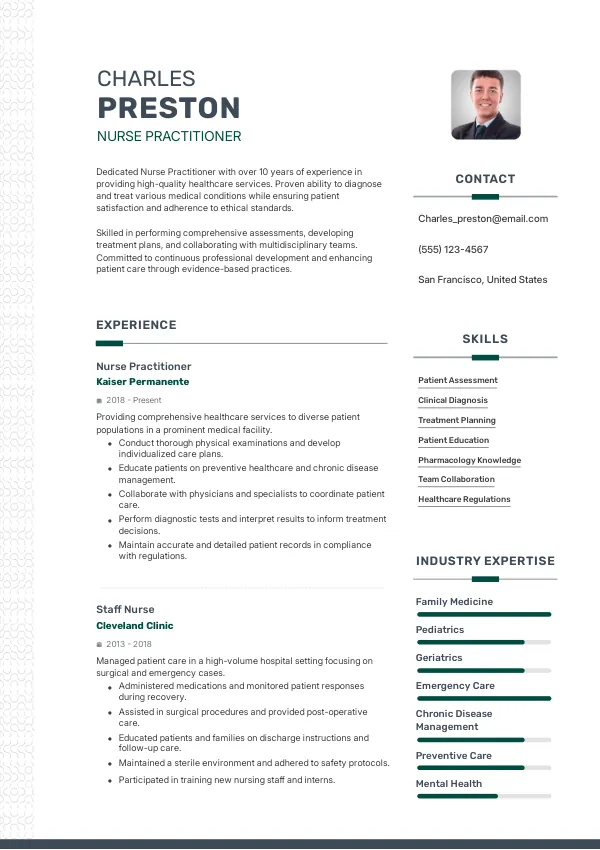
Nurse Practitioners play a vital role in the healthcare system, and crafting an effective resume is essential to securing interviews. However, many applicants overlook critical details that can lead to rejection. To improve your chances, consider reviewing your resume with mistakes.cv to catch potential issues early.
How Recruiters Evaluate Nurse Practitioner Resumes
Recruiters and ATS systems prioritize resumes that clearly outline relevant skills and experiences. Many candidates unknowingly include mistakes that could easily be avoided with an external review. Understanding how these documents are evaluated can help you tailor your resume to meet specific requirements.
Often, candidates are rejected for minor errors that detract from their qualifications. Regularly reviewing your resume with mistakes.cv can help ensure you're presenting your best self.
Ensure your resume meets industry standards and increases interview chances.
Review NowCommon Resume Mistakes for Nurse Practitioners
Mistake #1 – Poor Formatting
Why this hurts
Resumes with inconsistent formatting can confuse recruiters, making them less likely to consider your application. Clean, uniform formatting helps highlight your qualifications.
Example
- Bad: Mixed font types and sizes.
- Better: Consistent font style and size throughout.
How to fix
- Choose a professional font and maintain consistent formatting for headings and body text.
Mistake #2 – Lack of Keywords
Why this hurts
Failing to include relevant keywords can result in your resume being overlooked by ATS systems. Keywords related to Nurse Practitioner roles are crucial for passing automated screenings.
Example
- Bad: Generic phrases like 'healthcare professional.'
- Better: Specific terms like 'patient assessment,' 'chronic disease management.'
How to fix
- Review job descriptions and integrate relevant keywords into your resume.
Mistake #3 – Vague Descriptions
Why this hurts
Vague job descriptions do not effectively convey your skills or accomplishments, leading recruiters to question your qualifications.
Example
- Bad: 'Responsible for patient care.'
- Better: 'Provided comprehensive care to a diverse patient population, managing treatment plans and follow-up care.'
How to fix
- Use specific and quantifiable language to describe your responsibilities and achievements.
Mistake #4 – Missing Contact Information
Why this hurts
Not including your contact information can prevent recruiters from reaching you for interviews. It’s a basic but crucial mistake.
Example
- Bad: No phone number or email listed.
- Better: Clear contact information at the top of the resume.
How to fix
- Always include your full name, phone number, and professional email at the beginning of your resume.
Mistake #5 – Overly Lengthy Resumes
Why this hurts
Long resumes can overwhelm recruiters, making it difficult for them to find key information quickly. Aim for brevity while ensuring clarity.
Example
- Bad: A two-page resume with excessive detail.
- Better: A concise one-page resume that highlights the most relevant experience.
How to fix
- Condense your resume to one page, focusing on the most relevant and impactful experiences.
Mistake #6 – Ignoring Soft Skills
Why this hurts
While technical skills are vital, neglecting to mention soft skills can make your resume less compelling. Soft skills are increasingly valued in healthcare settings.
Example
- Bad: 'Focused solely on clinical skills.'
- Better: 'Demonstrated strong communication and teamwork skills in a clinical environment.'
How to fix
- Incorporate soft skills into your descriptions to present a well-rounded profile.
Mistake #7 – Not Tailoring Your Resume
Why this hurts
Using a generic resume for multiple applications can lead to missed opportunities. Tailoring your resume shows recruiters that you are genuinely interested in the position.
Example
- Bad: Sending the same resume for every job.
- Better: Customizing your resume for each job application.
How to fix
- Adapt your resume to reflect the specific requirements and responsibilities of each job.
Mistake #8 – Focusing on Duties Instead of Achievements
Why this hurts
Listing only duties fails to showcase your contributions and successes in previous roles, making you less appealing to recruiters.
Example
- Bad: 'Administered medications.'
- Better: 'Administered medications with a 99% accuracy rate, contributing to improved patient outcomes.'
How to fix
- Highlight achievements and the impact of your work, rather than just listing duties.


ATS-Specific Issues
Many resumes fail to pass ATS due to improper file formats, excessive graphics, or lack of structured data. These systems often struggle to read documents that aren’t optimized for them. Without an automated or expert review, it can be hard to identify these issues. Consider getting your resume checked with mistakes.cv to ensure it meets ATS criteria.
Resume Mistakes by Experience Level
Entry-Level
Entry-level Nurse Practitioners often make the mistake of underplaying their clinical rotations or internships. Highlighting relevant experiences, even if limited, can showcase your capabilities.
Mid-Level
Mid-level Nurse Practitioners sometimes fail to reflect leadership or initiative in their resumes. Emphasizing management or mentoring roles can signal readiness for advancement.
Senior / Lead
Senior Nurse Practitioners may overlook the importance of strategic accomplishments. Focusing on how you’ve influenced healthcare delivery or policy can distinguish you from other candidates.
Get insights from experts to refine your application and stand out.
Get HelpQuick Checklist for Your Resume
- Use consistent formatting throughout.
- Incorporate relevant keywords from job descriptions.
- Be specific in your job descriptions.
- Include clear contact information.
- Limit your resume to one page if possible.
- Mention both technical and soft skills.
- Tailor your resume for each application.
- Highlight achievements, not just duties.
- Ensure your resume is ATS-friendly.
- Review your resume with mistakes.cv for hidden issues.
Frequently Asked Questions
What should I include in my Nurse Practitioner resume?
Focus on relevant clinical experiences, certifications, and specific skills related to patient care.
How long should my resume be?
A concise one-page format is preferred, especially for entry-level positions.
Should I include my GPA on my resume?
Including your GPA can be beneficial if you are a recent graduate, especially if it is above 3.0.
What if I have gaps in my work history?
Be honest about gaps and focus on what you did during that time, such as volunteering or furthering your education.
How can I ensure my resume passes ATS?
Use standard fonts, avoid images, and include relevant keywords. Consider using mistakes.cv for a review.
Take Action on Your Resume Today
Don’t let resume mistakes cost you interviews. Take the time to review and improve your resume to reflect your best qualifications. Utilize mistakes.cv for expert insights and ensure your resume is ready to impress.
Start your journey toward landing your desired Nurse Practitioner position by getting your resume checked today!

 UAE
UAE Qatar
Qatar Saudi Arabia
 South Africa
 Brazil
 USA
USA Canada
 Australia
 United Kingdom
 New Zealand
 Singapore
 Germany
 France
 Spain
Spain Greece
 Italy
Italy India
India Philippines
 Malaysia
 Indonesia
 South Korea
 Japan
Japan