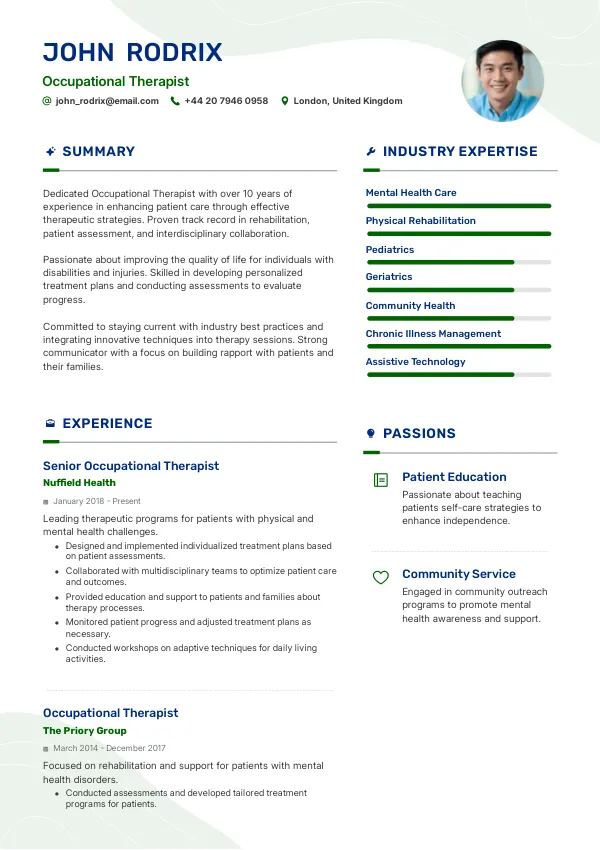
Common Resume Mistakes for Occupational Therapists
As an Occupational Therapist in the UK, your CV serves as a crucial tool for securing interviews. However, many candidates make mistakes that can cost them opportunities. Understanding these common pitfalls is essential to presenting yourself effectively. Consider reviewing your CV to identify and rectify any hidden mistakes that might lead to repeated rejections.
How Recruiters Evaluate Your CV
Recruiters and hiring managers assess CVs based on specific criteria tailored to the Occupational Therapy role. They look for relevant experience, skills, and qualifications. Unfortunately, candidates often overlook issues that can lead to rejection, such as formatting errors or lack of keyword relevance. An external review can help uncover these oversights.
Many candidates miss out on interviews due to mistakes they are unaware of, making it beneficial to seek a professional assessment of your CV for potential improvements.
Ensure your CV is error-free and optimized for ATS.
Review NowCommon Resume Mistakes for Occupational Therapists
Mistake #1 – Poor Formatting
Why this hurts
Inconsistent formatting can distract recruiters and make your CV hard to read. It signals a lack of attention to detail.
Example
- Bad: Random font sizes and styles throughout.
- Better: Consistent font and size across all sections.
How to fix
- Use a clear, professional format with uniform font sizes and styles.
Mistake #2 – Vague Job Descriptions
Why this hurts
Vague descriptions fail to showcase your specific skills and achievements, making it difficult for recruiters to gauge your fit for the role.
Example
- Bad: "Worked with patients."
- Better: "Developed tailored rehabilitation plans for patients with neurological conditions, improving recovery rates by 30%."
How to fix
- Be specific about your responsibilities and quantify achievements when possible.
Mistake #3 – Lack of Keywords
Why this hurts
Not including relevant keywords can lead to your CV being overlooked by ATS systems, which filter CVs based on keyword matches.
Example
- Bad: "Worked in healthcare."
- Better: "Provided evidence-based occupational therapy interventions to enhance patient independence."
How to fix
- Incorporate keywords from the job description into your CV to improve ATS compatibility.
Mistake #4 – Omitting Relevant Experience
Why this hurts
Failing to include pertinent experience can make it seem like you lack the qualifications necessary for the role.
Example
- Bad: Listing unrelated jobs without context.
- Better: Highlighting relevant volunteer work or internships.
How to fix
- Prioritize relevant experiences that align with the job requirements.
Mistake #5 – Using a Generic Objective Statement
Why this hurts
Generic statements do not convey your unique value or career goals, leading to a lack of engagement from recruiters.
Example
- Bad: "Looking for a job in healthcare."
- Better: "Aspiring to leverage my skills in occupational therapy to enhance patient outcomes in a community health setting."
How to fix
- Craft a tailored objective that reflects your specific aspirations and how they align with the role.
Mistake #6 – Inconsistent Employment Dates
Why this hurts
Inconsistent dates raise red flags for recruiters, suggesting you may not be truthful about your experience.
Example
- Bad: "Worked from June 2019 to January 2020, then from March 2021."
- Better: "Worked from June 2019 to January 2020 and from March 2021 to present."
How to fix
- Ensure your employment dates are accurate and consistent throughout your CV.
Mistake #7 – Not Tailoring Your CV
Why this hurts
A one-size-fits-all CV fails to demonstrate your genuine interest in the specific role and organization.
Example
- Bad: Using the same CV for every application.
- Better: Customizing your CV for each application based on the job description.
How to fix
- Tailor your CV to highlight experiences and skills that match the job requirements.
Mistake #8 – Ignoring Soft Skills
Why this hurts
Occupational Therapy relies heavily on interpersonal skills; neglecting to mention these can be a missed opportunity.
Example
- Bad: "Focused on clinical skills."
- Better: "Skilled in building rapport with patients and collaborating with multidisciplinary teams."
How to fix
- Include soft skills alongside clinical competencies to provide a well-rounded view of your capabilities.
Common ATS Mistakes for Occupational Therapists
ATS systems can misinterpret formatting, leading to critical information being overlooked. Resumes that use complex formatting or graphics can be challenging for ATS to parse correctly. Additionally, if your CV lacks the necessary keywords, it may not reach recruiters at all. Identifying and rectifying these ATS-specific issues can be challenging without a professional review, which is where mistakes.cv can assist you.
Mistakes by Experience Level
Entry
Entry-level candidates often underestimate the importance of relevant volunteer experience or internships. Highlighting these can make a significant difference in demonstrating potential.
Mid
Mid-level professionals might neglect to showcase leadership skills or significant achievements in their previous roles. Highlighting specific contributions can set you apart.
Senior
Senior or lead candidates often fail to communicate strategic thinking or influence. It's essential to frame your experience to reflect your capacity for leadership and vision.
Unlock your potential with a professional CV review.
Get StartedQuick Checklist for Your Occupational Therapist CV
- Ensure formatting is consistent and professional.
- Use specific language in job descriptions.
- Incorporate relevant keywords from job listings.
- Include all pertinent experiences.
- Customize your objective statement for each application.
- Verify all employment dates for accuracy.
- Tailor your CV to each job application.
- Highlight both clinical and soft skills.
- Review your CV for spelling and grammatical errors.
- Consider a professional CV review to identify hidden mistakes.
FAQs for Occupational Therapists in the UK
What should I include in my Occupational Therapist CV?
Focus on relevant experience, qualifications, and key skills that align with the job description.
How can I make my CV stand out?
Use specific examples of your achievements and tailor your CV for each application to demonstrate genuine interest.
Do I need to include my entire work history?
No, focus on the most relevant roles and experiences that showcase your qualifications for the position.
How important are keywords in my CV?
Keywords are crucial for ATS systems to identify your CV as relevant to the job, so ensure you include them strategically.
Can a CV review really help me?
Yes, a professional CV review can uncover mistakes and enhance the overall effectiveness of your application.
Take Action to Improve Your CV Today
Your CV is a critical tool in your job search as an Occupational Therapist. By addressing common mistakes and tailoring your application, you can enhance your chances of landing interviews.
Consider reviewing your CV with mistakes.cv for expert insights that could make all the difference in your job search.

 UAE
UAE Qatar
Qatar Saudi Arabia
 South Africa
 Brazil
 USA
USA Canada
 Australia
 United Kingdom
 New Zealand
 Singapore
 Germany
 France
 Spain
Spain Greece
 Italy
Italy India
India Philippines
 Malaysia
 Indonesia
 South Korea
 Japan
Japan