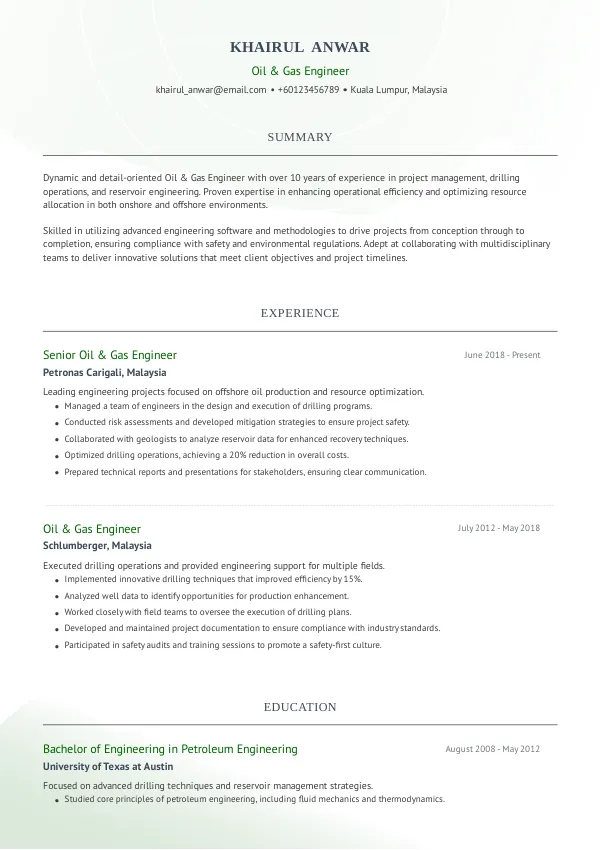
Understanding Resume Mistakes for Oil & Gas Engineers
As an Oil & Gas Engineer in Malaysia, your resume plays a pivotal role in landing interviews. However, mistakes in your resume can significantly reduce your chances of being noticed by recruiters. To navigate the competitive job market effectively, it’s crucial to identify and rectify these errors early on. Consider reviewing your resume with mistakes.cv to avoid repeated rejections.
How Recruiters Evaluate Resumes in Malaysia
Recruiters in the oil and gas sector focus on specific qualifications, experience, and technical skills when evaluating resumes. They often rely on Applicant Tracking Systems (ATS) to streamline the screening process. Many candidates are unaware of the issues that could lead to rejection, which is why an external review can provide valuable insights.
Understanding what recruiters look for can help you tailor your resume more effectively. Regular check-ups with mistakes.cv can help you uncover hidden mistakes in your application.
Ensure your resume is error-free and ATS-friendly.
Review NowCommon Resume Mistakes for Oil & Gas Engineers
Mistake #1 – Lack of Keywords
Why this hurts
Failing to include relevant industry keywords can lead to your resume being overlooked by ATS. Recruiters search for specific terms related to the oil and gas sector, and without them, your qualifications may go unnoticed.
Example
- Bad: "Experienced in project management."
- Better: "Experienced in upstream and downstream project management, including drilling and production operations."
How to fix
- Research job descriptions and incorporate essential keywords throughout your resume.
Mistake #2 – Poor Formatting
Why this hurts
Complex formatting can confuse ATS software, which may lead to your resume being improperly parsed. Recruiters prefer clean, straightforward layouts that are easy to read.
Example
- Bad: Overly decorative fonts and multiple colors.
- Better: A professional font like Arial or Calibri with consistent formatting.
How to fix
- Use standard fonts and simple layouts. Avoid graphics and images that ATS cannot read.
Mistake #3 – Vague Job Descriptions
Why this hurts
Vague or generalized job descriptions fail to convey your specific contributions and achievements. Recruiters want to see quantifiable results and responsibilities.
Example
- Bad: "Worked on drilling projects."
- Better: "Led a team in drilling 15 exploratory wells, resulting in a 25% increase in production efficiency."
How to fix
- Detail your achievements with metrics and specific examples to demonstrate your impact.
Mistake #4 – Ignoring Soft Skills
Why this hurts
Technical skills are vital, but soft skills like communication and teamwork are equally important in the oil and gas industry. Ignoring them can limit your appeal to recruiters.
Example
- Bad: "Technical expertise in engineering."
- Better: "Demonstrated ability to collaborate with cross-functional teams and communicate complex technical concepts effectively."
How to fix
- Highlight soft skills that complement your technical abilities to present a well-rounded profile.
Mistake #5 – Not Tailoring Your Resume
Why this hurts
Using a one-size-fits-all resume can signal a lack of genuine interest in the position. Tailored resumes resonate more with recruiters.
Example
- Bad: Submitting the same resume for multiple positions.
- Better: Customizing your resume for each job application to reflect the specific requirements and responsibilities.
How to fix
- Adjust your resume for each application by aligning your skills and experiences with the job description.
Mistake #6 – Ignoring Local Context
Why this hurts
Not understanding the local job market and cultural expectations can hinder your application. Recruiters in Malaysia appreciate resumes that reflect local industry standards and norms.
Example
- Bad: Using a generic resume template without local context.
- Better: Including local certifications and understanding of regional regulations.
How to fix
- Research local practices and incorporate relevant details that resonate with Malaysian recruiters.
Mistake #7 – Listing Irrelevant Experience
Why this hurts
Including unrelated work experience can dilute the focus of your resume, making it harder for recruiters to see your qualifications for the oil and gas sector.
Example
- Bad: Extensive details about non-engineering roles.
- Better: Highlighting only relevant engineering experience and related skills.
How to fix
- Focus on relevant positions and skills that directly relate to the oil and gas industry.


ATS-Specific Issues for Oil & Gas Engineers
Many resumes fail to pass through ATS due to improper formatting or the absence of relevant keywords. ATS can misinterpret complex structures, leading to rejection. Candidates often struggle to identify these issues on their own, making an expert review beneficial. Regularly checking your resume with mistakes.cv can help ensure it meets ATS requirements.
Mistakes by Experience Level
Entry-Level
Entry-level candidates often make the mistake of lacking relevant experience. Focus on internships or projects that demonstrate applicable skills. Highlight educational achievements, and don’t hesitate to mention any relevant coursework or certifications.
Mid-Level
Mid-level engineers should emphasize leadership and project management skills. Common mistakes include skimping on specifics about past roles or failing to quantify achievements. Showcase your ability to drive results and manage teams.
Senior / Lead
Senior and lead engineers must exhibit a strategic vision and technical leadership. They often overlook the importance of industry engagement or neglect to list significant projects. Ensure your resume reflects your leadership impact and industry contributions.
Identify key areas for improvement in your application.
Get FeedbackQuick Checklist for Your Resume
- Include relevant keywords from job descriptions.
- Use a clean and professional format.
- Quantify your achievements with metrics.
- Highlight both technical and soft skills.
- Tailor your resume for each application.
- Reflect local industry standards and regulations.
- Focus on relevant experience only.
- Check for ATS compatibility.
- Ensure clarity and conciseness.
- Proofread for spelling and grammatical errors.
FAQs for Oil & Gas Engineers in Malaysia
What should I include in my Oil & Gas Engineer resume?
Focus on relevant skills, experiences, and achievements in the oil and gas sector. Tailor your resume to the specific job you're applying for.
How can I make my resume ATS-friendly?
Use standard formatting, include relevant keywords, and avoid graphics that ATS might misinterpret. Regular checks with mistakes.cv can help.
What common mistakes do entry-level engineers make?
Entry-level engineers often lack relevant experience or fail to highlight internships. Focus on any practical experience gained during education.
Is it necessary to tailor my resume for each job?
Yes, tailoring your resume for each application increases your chances of landing an interview by aligning your skills with the job description.
How can I improve my chances of getting hired?
Review your resume for common mistakes and ensure it reflects your qualifications accurately. Consider getting a professional review with mistakes.cv.
Take the Next Step Towards Your Dream Job
Your resume is your first impression as an Oil & Gas Engineer. Don't let avoidable mistakes hold you back from securing interviews. Review your resume with mistakes.cv to ensure it’s optimized for success.
Take action now to enhance your application and improve your chances in the competitive job market!

 UAE
UAE Qatar
Qatar Saudi Arabia
 South Africa
 Brazil
 USA
USA Canada
 Australia
 United Kingdom
 New Zealand
 Singapore
 Germany
 France
 Spain
Spain Greece
 Italy
Italy India
India Philippines
 Malaysia
 Indonesia
 South Korea
 Japan
Japan