Introduction
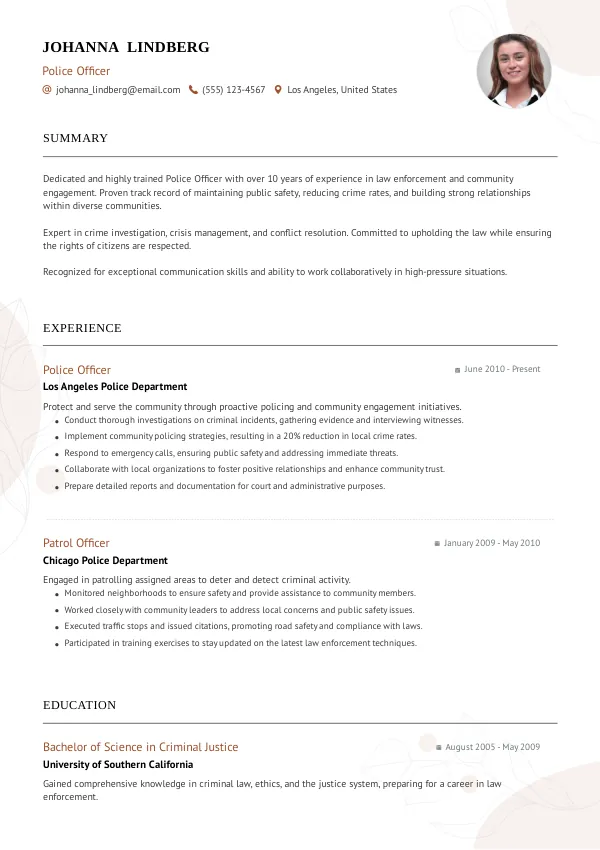
Applying for a police officer position in the United States can be highly competitive. Your resume is often the first impression you make on potential employers, and any mistakes can significantly reduce your chances of securing an interview. It’s essential to present a flawless resume that highlights your qualifications effectively. Before submitting your application, consider reviewing your resume with mistakes.cv to avoid common pitfalls.
How Recruiters Evaluate Resumes
Recruiters and hiring managers evaluate police officer resumes based on specific criteria related to law enforcement skills, experience, and qualifications. They often use Applicant Tracking Systems (ATS) to filter applications, which means that your resume must be optimized for both human readers and software. Many candidates overlook subtle errors that can lead to rejection, which is why an external review can be invaluable for identifying these issues.
By understanding what recruiters are looking for, you can tailor your resume to meet their expectations and improve your chances of getting noticed in the application process.
Ensure your resume is ATS-friendly and error-free with our help.
Get StartedCommon Resume Mistakes for Police Officers
Mistake #1 – Poor Formatting
Why this hurts
Inconsistent formatting can distract recruiters and give the impression that you lack attention to detail. Recruiters prefer clean, easy-to-read layouts.
Example
- Bad: Mixed font sizes and types
- Better: Uniform font and size throughout
How to fix
- Use standard, professional fonts like Arial or Times New Roman.
- Keep font sizes consistent and use bullet points for readability.
Mistake #2 – Irrelevant Information
Why this hurts
Including unrelated work experience or personal details can dilute your qualifications. Recruiters focus on relevant skills and experiences.
Example
- Bad: Listing high school jobs unrelated to law enforcement
- Better: Highlighting internships or volunteer work in law enforcement
How to fix
- Tailor your resume to include only experiences that relate to police work.
- Focus on skills applicable to law enforcement, such as communication and conflict resolution.
Mistake #3 – Weak Action Verbs
Why this hurts
Using vague language can make your accomplishments sound less impressive. Strong action verbs convey impact and initiative.
Example
- Bad: "Responsible for community outreach"
- Better: "Led community outreach initiatives that increased public engagement by 30%."
How to fix
- Utilize powerful action verbs like 'led,' 'coordinated,' and 'implemented.'
- Quantify your achievements wherever possible to demonstrate your contributions.
Mistake #4 – Lack of Keywords
Why this hurts
ATS algorithms scan for specific keywords relevant to the job. Missing these can lead to automatic rejection.
Example
- Bad: Not mentioning required qualifications
- Better: Including terms like 'criminal justice,' 'community policing,' and 'investigative skills.'
How to fix
- Review the job posting and incorporate relevant keywords into your resume.
- Check for synonyms and variations that ATS may look for.
Mistake #5 – Failing to Highlight Certifications
Why this hurts
Certifications relevant to law enforcement are crucial. Not showcasing them can make you seem less qualified.
Example
- Bad: Listing certifications at the end of the resume
- Better: Creating a dedicated section for certifications near the top.
How to fix
- Ensure that all relevant certifications, such as CPR, First Aid, or specialized training, are easily visible.
- Consider a section specifically for these credentials to draw attention.
Mistake #6 – Vague Job Descriptions
Why this hurts
Unclear job descriptions can confuse recruiters about your actual responsibilities and achievements.
Example
- Bad: "Worked at law enforcement agency"
- Better: "Served as a patrol officer, responding to emergency calls and conducting traffic stops."
How to fix
- Use specific language to describe your roles and responsibilities.
- Emphasize your contributions and the skills you utilized.
Mistake #7 – Not Tailoring Your Resume
Why this hurts
Submitting a generic resume can suggest a lack of effort and interest in the specific role.
Example
- Bad: Using the same resume for every application
- Better: Customizing your resume for each position you apply for.
How to fix
- Adjust your resume to reflect the requirements and responsibilities of each job.
- Highlight experiences that align with the specific police role.
Mistake #8 – Ignoring the Cover Letter
Why this hurts
A cover letter provides context to your resume, and ignoring it can be a missed opportunity to showcase your personality.
Example
- Bad: Not submitting a cover letter
- Better: Including a well-crafted cover letter with your resume.
How to fix
- Write a tailored cover letter that complements your resume.
- Use it to explain your passion for law enforcement and your suitability for the role.

ATS-Specific Issues
Many resumes face challenges with ATS parsing. Issues like using unusual file formats, excessive graphics, or unconventional layouts can lead to filtering errors. These ATS-related mistakes are often hard to identify without expert assistance. A detailed review using mistakes.cv can help you uncover these hidden errors and optimize your resume for better chances.
Mistakes by Experience Level
Entry-Level
Entry-level candidates often make the mistake of overemphasizing unrelated experiences, which can detract from relevant skills. Focus on internships, volunteer work, or relevant coursework that showcases your commitment to law enforcement.
Mid-Level
Mid-level professionals may fail to highlight leadership experiences. Demonstrating your ability to lead teams or projects is crucial to advancing in your career.
Senior/Lead
Senior candidates must showcase strategic thinking and program management skills. Failing to present these abilities can make you seem less qualified for leadership roles.
Catch overlooked mistakes and improve your resume for police officer roles.
Review NowQuick Checklist Before Applying
- Ensure consistent formatting throughout your resume.
- Include only relevant work experiences.
- Utilize strong action verbs to describe your accomplishments.
- Incorporate relevant keywords from the job description.
- Highlight certifications clearly.
- Provide specific job descriptions with quantifiable achievements.
- Tailor your resume for each application.
- Submit a cover letter that complements your resume.
- Check for ATS-friendly formatting.
- Review your resume using mistakes.cv for hidden errors.
Frequently Asked Questions
What should I include on my police officer resume?
Focus on relevant experience, skills related to law enforcement, and certifications. Tailor your resume to match the job description.
How can I make my resume stand out?
Use clear formatting, strong action verbs, and quantify your achievements to demonstrate your impact. Consider a review with mistakes.cv for added insight.
Are cover letters necessary for police officer applications?
Yes, a cover letter can provide context and show your enthusiasm for the role. Always include one tailored to the specific job.
What common mistakes do recruiters see?
Common mistakes include poor formatting, irrelevant information, and lack of keywords. A professional review can help you identify these issues.
How can I prepare for the application process?
Prepare by researching the department, tailoring your resume, and practicing for interviews. A review of your resume can clarify any uncertainties.
Take Action Now
Don't let minor resume mistakes sabotage your chances of becoming a police officer. Review your resume with mistakes.cv to catch hidden issues and improve your application.
Act now to ensure your resume stands out and showcases your qualifications effectively!

 UAE
UAE Qatar
Qatar Saudi Arabia
 South Africa
 Brazil
 USA
USA Canada
 Australia
 United Kingdom
 New Zealand
 Singapore
 Germany
 France
 Spain
Spain Greece
 Italy
Italy India
India Philippines
 Malaysia
 Indonesia
 South Korea
 Japan
Japan