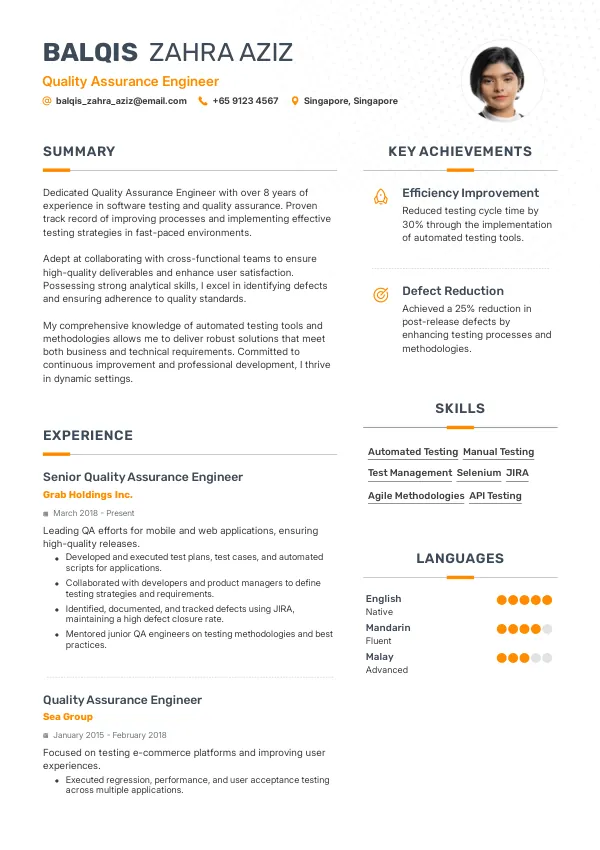
Understanding Quality Assurance Engineer Resume Mistakes
As a Quality Assurance Engineer in Singapore, your resume plays a pivotal role in landing interviews. Many applicants overlook critical mistakes that can diminish their chances of getting noticed by recruiters. Understanding and avoiding these pitfalls is essential for showcasing your skills effectively. Consider reviewing your resume with mistakes.cv to ensure you are presenting yourself in the best possible light.
How Recruiters Evaluate QA Engineer Resumes
Recruiters in Singapore rely on both manual screening and ATS systems to filter resumes. They look for relevant experience, skills, and keywords that match job descriptions. Unfortunately, candidates often miss simple errors that lead to rejection without realizing it. An external review can uncover these hidden mistakes, increasing your chances of making it to the interview stage.
Understanding how your resume aligns with what recruiters seek can make a significant difference. Knowing the common criteria can help tailor your CV accordingly.
Enhance your chances of interview success with a resume review.
Review NowCommon Resume Mistakes for Quality Assurance Engineers
Mistake #1 – Poor Formatting
Why this hurts
Inconsistent formatting makes your resume look unprofessional and can confuse ATS systems. Recruiters prefer neat, organized resumes that are easy to scan.
Example
- Bad: Different font styles and sizes throughout the resume.
- Better: A uniform font style and size for all sections.
How to fix
- Use a single, professional font and maintain consistent heading styles.
Mistake #2 – Lack of Keywords
Why this hurts
Not including relevant keywords can lead to your resume being filtered out by ATS. Recruiters look for specific skills and terminology related to Quality Assurance.
Example
- Bad: "Experience with testing."
- Better: "Proficient in automated testing tools like Selenium and JIRA."
How to fix
- Review job descriptions for keywords and incorporate them naturally into your resume.
Mistake #3 – Vague Job Descriptions
Why this hurts
Ambiguity in your job descriptions makes it hard for recruiters to gauge your expertise. Clear, specific details are essential for demonstrating your capabilities.
Example
- Bad: "Worked on various projects."
- Better: "Led QA efforts for a mobile application, improving bug detection by 30%."
How to fix
- Use quantifiable achievements and specific responsibilities to highlight your experience.
Mistake #4 – Ignoring Soft Skills
Why this hurts
Quality Assurance is as much about communication and teamwork as it is about technical skills. Omitting soft skills can make the resume less appealing.
Example
- Bad: "Technical skills only listed."
- Better: "Collaborative team player with strong problem-solving skills."
How to fix
- Include a section for soft skills that are relevant to the QA role.
Mistake #5 – Spelling and Grammar Errors
Why this hurts
Spelling and grammatical mistakes create a negative impression and suggest a lack of attention to detail, which is crucial in QA roles.
Example
- Bad: "I have expereince in testing."
- Better: "I have experience in testing."
How to fix
- Proofread multiple times and consider using tools like Grammarly to catch errors.
Mistake #6 – Not Tailoring Your Resume
Why this hurts
Using a generic resume for all applications reduces your chances of standing out. Recruiters favor candidates who customize their resumes to the job description.
Example
- Bad: A one-size-fits-all resume.
- Better: A resume specifically highlighting skills relevant to the job applied for.
How to fix
- Tailor your resume for each application by emphasizing relevant skills and experiences.
Mistake #7 – Overloading with Technical Jargon
Why this hurts
While technical knowledge is vital, overloading your resume with jargon can alienate non-technical recruiters.
Example
- Bad: Overuse of acronyms and technical terms without explanation.
- Better: Clear descriptions that explain technical terms when necessary.
How to fix
- Balance technical language with clear explanations to remain accessible.
Mistake #8 – Focusing Too Much on Responsibilities
Why this hurts
Simply listing responsibilities without showcasing accomplishments fails to demonstrate your impact in previous roles.
Example
- Bad: "Responsible for testing software."
- Better: "Successfully reduced software bugs by 40% through rigorous testing protocols."
How to fix
- Focus on achievements and contributions rather than just responsibilities.
Common ATS-Related Issues
Applicant Tracking Systems (ATS) can misinterpret formatting and keywords, leading to potential disqualification. Many candidates unknowingly create resumes that ATS cannot effectively parse. For example, using tables, images, or unusual fonts can confuse the software.
To avoid these pitfalls, consider that ATS-related errors are often not obvious until you have an automated or expert review. A service like mistakes.cv can help identify and rectify these issues before you apply.
Mistakes by Experience Level
Entry
Entry-level candidates often struggle with lack of experience. They may list irrelevant internships or academic projects without quantifying their impacts. Tailoring their resumes to highlight relevant coursework or skills is crucial.
Mid
Mid-level professionals might overlook soft skills or fail to quantify their achievements. Focusing on leadership roles or team contributions can help them stand out.
Senior
Senior candidates often make the mistake of using technical jargon excessively and not demonstrating their leadership impact. They should focus on strategic contributions and mentorship roles.
Get a second opinion on your resume to spot hidden mistakes.
Get FeedbackQuick Checklist for Your Resume
- Ensure consistent formatting throughout.
- Include relevant keywords from job descriptions.
- Provide clear and specific job descriptions.
- Highlight both technical and soft skills.
- Proofread for spelling and grammar errors.
- Tailor your resume for each job application.
- Avoid excessive technical jargon.
- Focus on accomplishments rather than just responsibilities.
- Check ATS compatibility by using standard formats.
- Consider a professional review for hidden mistakes.
FAQs for Quality Assurance Engineers in Singapore
What should I include in my QA engineer resume?
Focus on relevant skills, experiences, and achievements that align with the job description.
How can I improve my chances of getting hired?
Tailor your resume for each application and highlight both technical and soft skills.
What common mistakes should I avoid?
Common mistakes include vague descriptions, poor formatting, and lack of keywords.
Is it necessary to have a resume review?
A professional review can help identify hidden mistakes that you might overlook.
How often should I update my resume?
Update your resume regularly, especially after significant projects or job changes.
Take Action to Improve Your Resume
Now that you're aware of the common resume mistakes for Quality Assurance Engineers, it's time to take action. Reviewing and improving your resume can significantly enhance your chances of landing that interview.
Don’t hesitate to leverage services like mistakes.cv for a thorough review. Make sure your resume is polished and ready to impress potential employers!

 UAE
UAE Qatar
Qatar Saudi Arabia
 South Africa
 Brazil
 USA
USA Canada
 Australia
 United Kingdom
 New Zealand
 Singapore
 Germany
 France
 Spain
Spain Greece
 Italy
Italy India
India Philippines
 Malaysia
 Indonesia
 South Korea
 Japan
Japan