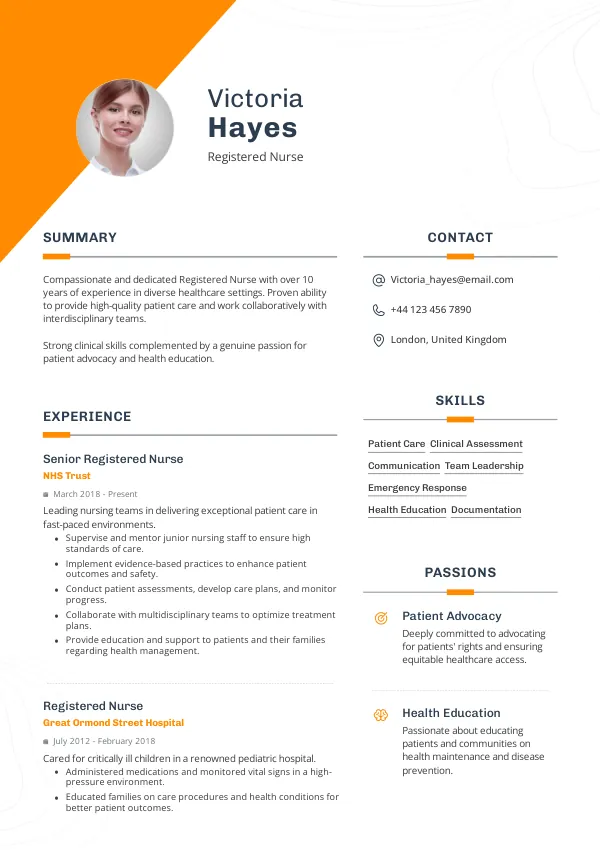
Introduction to CV Mistakes for Registered Nurses
As a Registered Nurse in the UK, your CV serves as the first impression for potential employers. However, many candidates fail to secure interviews due to common mistakes in their CVs. Understanding and correcting these errors can significantly enhance your chances of being noticed by recruiters.
Before sending out your CV, consider reviewing it for hidden mistakes that could be holding you back from your dream nursing role. Mistakes.cv can help you uncover these issues.
How Recruiters Evaluate Nursing CVs
Recruiters in the UK typically scan CVs quickly, looking for relevant qualifications and experience that match their job requirements. The Applicant Tracking System (ATS) also plays a vital role, filtering CVs based on specific keywords and formatting. Many candidates are unaware of the pitfalls that lead to automatic rejections, such as missing key terms or improper formatting.
To avoid being overlooked, ensure your CV aligns with common industry standards and reflects the qualifications necessary for the nursing role you are applying for. An external review can highlight issues that you might miss on your own.
Get tailored insights for your nursing CV to stand out.
Get StartedCommon CV Mistakes for Registered Nurses
Mistake #1 – Poor Formatting
Why this hurts
Recruiters find poorly formatted CVs difficult to read, which can result in immediate rejection. A cluttered layout can distract from your qualifications.
Example
- Bad: Irregular font sizes and styles, excessive use of colours.
- Better: Consistent font size, clear headings, and a professional colour scheme.
How to fix
- Use a clear, professional format with uniform font sizes and styles throughout.
- Ensure ample white space for readability.
Mistake #2 – Lack of Keywords
Why this hurts
Without relevant keywords, your CV may not pass through ATS filters. Recruiters often rely on software to screen candidates based on specific terms.
Example
- Bad: Generic phrases like “worked in healthcare.”
- Better: Specific keywords like “patient care,” “clinical assessments,” or “medication management.”
How to fix
- Incorporate keywords from the job description into your CV naturally.
Mistake #3 – Inconsistent Experience Framing
Why this hurts
Inconsistencies in how you present your experience can confuse recruiters and create doubts about your qualifications.
Example
- Bad: Listing job duties without context.
- Better: Detailing your achievements and responsibilities with quantifiable results.
How to fix
- Use bullet points to clearly outline your responsibilities and achievements, focusing on quantifiable results.
Mistake #4 – Generalisation of Skills
Why this hurts
Generic skills do not stand out to recruiters looking for specific nursing competencies, which can lead to missed opportunities.
Example
- Bad: “Good communication skills.”
- Better: “Effectively communicated with multidisciplinary teams to ensure comprehensive patient care.”
How to fix
- Tailor your skills section to reflect the specific requirements of the role.
Mistake #5 – Omitting Relevant Certifications
Why this hurts
Not mentioning essential certifications can lead recruiters to assume you do not hold necessary qualifications.
Example
- Bad: Listing only general education.
- Better: Including specific certifications like “NMC Registered Nurse” or “Advanced Life Support.”
How to fix
- Clearly list all relevant certifications and training that enhance your candidacy.
Mistake #6 – Ignoring Job Descriptions
Why this hurts
Failing to tailor your CV to the job description makes it less likely to match the recruiter’s expectations.
Example
- Bad: Using the same CV for every application.
- Better: Customising your CV for each job application based on the specific requirements.
How to fix
- Review each job description carefully and adjust your CV to highlight relevant experiences and skills.
Mistake #7 – Neglecting Professional Development
Why this hurts
Recruiters value continuous learning; neglecting to mention ongoing professional development can make you seem disengaged.
Example
- Bad: No mention of workshops or courses taken.
- Better: “Completed a workshop on palliative care in 2022.”
How to fix
- Include any relevant professional development activities in your CV.
Mistake #8 – Using Unprofessional Email Addresses
Why this hurts
Recruiters may judge your professionalism based on your email address. An unprofessional email can impact their perception of you.
Example
- Bad: “[email protected]”
- Better: “[email protected]”
How to fix
- Create a simple, professional email address using your name.
Common ATS-Related Issues for Nursing CVs
Many CVs fail to pass ATS due to formatting issues, such as using tables or images that the software cannot read. Additionally, incorrect file types can lead to rejection. Once again, these issues are hard to diagnose without an expert review.
Consider using mistakes.cv to check your CV for ATS compatibility and ensure it meets the necessary standards for automated screening.
Mistakes by Experience Level
Entry-Level
Entry-level nurses may often overlook the importance of including clinical placements and relevant coursework. Highlighting these experiences can significantly enhance your CV.
Mid-Level
Mid-level nurses should focus on quantifying their achievements and showcasing leadership skills. Specific accomplishments can set you apart from other candidates.
Senior / Lead
Senior nurses must demonstrate strategic thinking and management capabilities. Failing to articulate these skills can lead to missed opportunities for leadership roles.
Identify hidden mistakes in your CV and fix them.
Review NowQuick Checklist for Your Nursing CV
- Ensure clear and professional formatting.
- Incorporate relevant keywords from job descriptions.
- Frame your experience with quantifiable achievements.
- Tailor your CV for each application.
- List all relevant certifications.
- Include ongoing professional development.
- Use a professional email address.
- Avoid jargon and generic statements.
- Check for spelling and grammar errors.
- Ensure ATS compatibility by avoiding complex formatting.
Frequently Asked Questions
What should I include in my nursing CV?
Your CV should include your qualifications, relevant experience, certifications, and a summary of skills tailored to the job you're applying for.
How long should my CV be?
For most nursing roles, a two-page CV is ideal. Ensure all information is relevant and concise.
Should I include references in my CV?
It's best to state that references are available upon request rather than listing them on your CV.
How can I make my CV stand out?
Use specific examples of your accomplishments, tailor your CV for each role, and ensure it's well-formatted and free of errors.
Can mistakes.cv help me improve my CV?
Absolutely! mistakes.cv can provide valuable insights and help you identify any hidden mistakes in your CV.
Take Action to Improve Your Nursing CV Today
Your CV is a vital tool in your job search as a Registered Nurse. By addressing the common mistakes outlined above, you can enhance your chances of securing interviews.
Consider using mistakes.cv for a comprehensive review of your CV. Taking this step could make all the difference in your nursing career.

 UAE
UAE Qatar
Qatar Saudi Arabia
 South Africa
 Brazil
 USA
USA Canada
 Australia
 United Kingdom
 New Zealand
 Singapore
 Germany
 France
 Spain
Spain Greece
 Italy
Italy India
India Philippines
 Malaysia
 Indonesia
 South Korea
 Japan
Japan