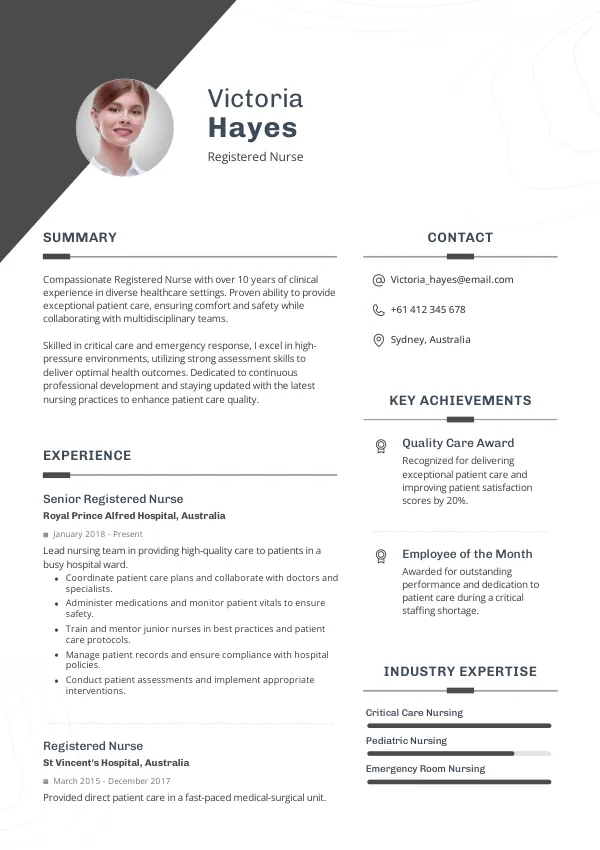
Understanding the Importance of a Strong Nursing Resume
As a Registered Nurse in Australia, your resume is your first chance to make a positive impression on potential employers. However, many candidates overlook critical elements that can hinder their chances of landing an interview. Simple mistakes can lead to repeated rejections, making it essential to ensure your resume is polished and professional. Consider reviewing your resume with mistakes.cv to catch any hidden issues early on.
How Recruiters Evaluate Nursing Resumes
Recruiters assess resumes for Registered Nurse positions by looking for relevant experience, certifications, and the ability to meet the job's demands. They utilize Applicant Tracking Systems (ATS) to filter candidates based on keywords and formatting. Unfortunately, many candidates are unaware of the subtle mistakes that could lead to their rejection. An external review can provide insight into these issues and help you present the best version of your professional self.
Without a thorough review, you might miss critical errors that could cost you an interview opportunity.
Get a detailed resume review to identify hidden mistakes.
Review NowCommon Resume Mistakes for Registered Nurses
Mistake #1 – Poor Formatting
Why this hurts
Recruiters can be turned off by messy or inconsistent formatting, which makes your resume hard to read. This can signal a lack of attention to detail.
Example
- Bad: Mixed fonts and sizes throughout the document.
- Better: Consistent font, size, and style across all sections.
How to fix
- Choose a clean, professional layout with uniform formatting. Consider using templates that are easy to read and ATS-friendly.
Mistake #2 – Irrelevant Information
Why this hurts
Including unrelated work experience or personal information can clutter your resume and distract from your qualifications as a nurse.
Example
- Bad: Listing unrelated job experiences that don't contribute to nursing.
- Better: Focusing on nursing-related roles and skills.
How to fix
- Tailor your resume to highlight relevant nursing experiences and skills that align with the job description.
Mistake #3 – Lack of Keywords
Why this hurts
ATS systems scan for specific keywords related to the nursing role. If your resume lacks these terms, it might not even reach a recruiter.
Example
- Bad: Using generic terms like 'helped' instead of specific nursing keywords.
- Better: Including terms like 'patient care', 'IV administration', and 'clinical assessments.'
How to fix
- Review job descriptions to identify key skills and integrate them into your resume where applicable.
Mistake #4 – Vague Job Descriptions
Why this hurts
Vague descriptions of your roles can leave recruiters confused about your actual responsibilities and achievements.
Example
- Bad: 'Managed patients in a hospital.'
- Better: 'Managed a caseload of 15 patients in a busy surgical ward, ensuring comprehensive care and support.'
How to fix
- Be specific about your duties and include quantifiable achievements to demonstrate your impact.
Mistake #5 – Inconsistent Experience Presentation
Why this hurts
Inconsistent presentation can confuse ATS and recruiters, leading them to miss critical information.
Example
- Bad: Mixing past and present tense or inconsistent listing order.
- Better: Using past tense for previous roles and present tense for current roles consistently.
How to fix
- Review your tense usage and ensure all experiences are listed in a consistent format.
Mistake #6 – Omitting Professional Development
Why this hurts
Not mentioning ongoing education or certifications can signal a lack of commitment to the nursing profession.
Example
- Bad: Leaving out recent certifications like ACLS or PALS.
- Better: Including all relevant training and certifications.
How to fix
- List any continuing education, certifications, or relevant training to demonstrate your commitment to professional development.
Mistake #7 – Weak Summary Statement
Why this hurts
A vague or uninspiring summary can fail to capture a recruiter’s attention and may lead to your resume being overlooked.
Example
- Bad: 'I am a nurse looking for a job.'
- Better: 'Compassionate Registered Nurse with over 5 years of experience in emergency care, dedicated to providing exceptional patient outcomes.'
How to fix
- Craft a strong summary that highlights your experience, skills, and what you bring to the role.
Mistake #8 – Ignoring the Job Description
Why this hurts
When your resume does not align with the job description, it can appear that you are not a good fit for the role.
Example
- Bad: Using a generic resume for every application.
- Better: Customizing your resume for each job application to reflect the skills and experiences that match.
How to fix
- Read the job description carefully and ensure your resume reflects the specific qualifications and experiences required.
ATS-Specific Issues for Nurses
ATS systems can misinterpret certain file formats, leading to loss of critical information. Additionally, resumes that are too complex may not parse correctly, causing your application to be filtered out before reaching a recruiter.
Common ATS mistakes include using images, unusual fonts, and special characters that can confuse the system. Consider using mistakes.cv to identify these issues and ensure your resume is ATS-compatible.
Resume Mistakes by Experience Level
Entry-Level
Entry-level nurses often struggle with presenting relevant experience. They might list too much unrelated work or lack specific nursing achievements. Focus on clinical placements and relevant education.
Mid-Level
Mid-level nurses should emphasize leadership roles and specific contributions to patient care. Avoid vague descriptions and ensure to highlight management experiences.
Senior / Lead
Senior nurses need to demonstrate their strategic impact on healthcare teams. They should avoid overly technical jargon that may alienate non-clinical recruiters. Ensure your leadership accomplishments are clear and impactful.
Learn how to optimize your resume for ATS.
Optimize NowQuick Checklist for Your Nursing Resume
- Use a clean and professional format.
- Tailor your resume for each application.
- Include relevant keywords from the job description.
- Avoid excessive personal information.
- Highlight quantifiable achievements.
- Ensure consistent tense usage.
- List ongoing education and certifications.
- Craft a compelling summary statement.
- Review for ATS compatibility.
- Proofread for spelling and grammar errors.
Frequently Asked Questions
What should I include in my nursing resume?
Include relevant work experience, certifications, skills, and a professional summary tailored for nursing roles.
How do I make my resume stand out?
Tailor your resume to each job application and highlight specific achievements that match the job description.
What format should I use for my nursing resume?
Use a clean, professional format that is ATS-friendly, avoiding images and unusual fonts.
How can I improve my chances of being hired?
Ensure your resume is error-free, tailored to the job, and includes relevant keywords for your nursing specialty.
Is it worth getting my resume reviewed?
Yes, a professional review can help identify mistakes you might overlook and improve your chances of landing an interview.
Take Action Now to Improve Your Resume
Don't let simple mistakes hold you back from securing your dream nursing position. Take the time to review and refine your resume today.
Consider using mistakes.cv for a comprehensive review, ensuring your document is polished, professional, and ready to impress recruiters.

 UAE
UAE Qatar
Qatar Saudi Arabia
 South Africa
 Brazil
 USA
USA Canada
 Australia
 United Kingdom
 New Zealand
 Singapore
 Germany
 France
 Spain
Spain Greece
 Italy
Italy India
India Philippines
 Malaysia
 Indonesia
 South Korea
 Japan
Japan