Introduction
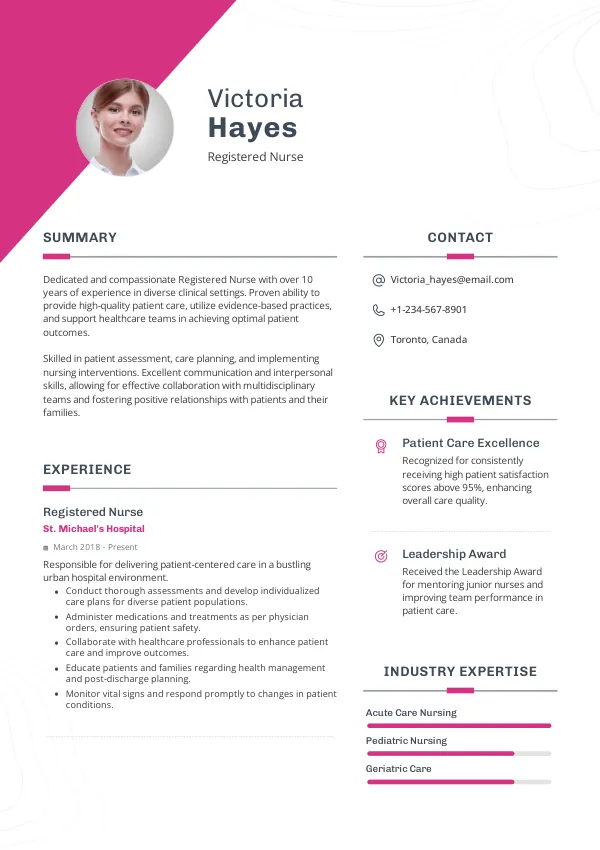
As a Registered Nurse in Canada, crafting a compelling resume is crucial for securing interviews in a competitive job market. Many candidates unknowingly include mistakes that can block their chances of getting noticed by recruiters. Reviewing your resume early can help you avoid repeated rejections and ensure your qualifications shine.
How Recruiters Evaluate Nursing Resumes
Recruiters in Canada typically scan resumes for relevant qualifications, experience, and certifications. They often use Applicant Tracking Systems (ATS) to filter resumes based on keywords and formatting. Many candidates are rejected for issues they never notice, which is why an external review can provide valuable insights.
It's essential to understand how your resume aligns with the expectations of both human recruiters and ATS algorithms.
Get expert insights to enhance your nursing resume today.
Improve NowCommon Resume Mistakes for Registered Nurses
Mistake #1 – Poor Formatting
Why this hurts
A cluttered or inconsistent format can make it difficult for recruiters to quickly find key information. Recruiters may reject resumes that are hard to read, and ATS systems may struggle to parse poorly formatted documents.
Example
- Bad: Random font sizes and colors throughout the resume.
- Better: Consistent font style and size, with clear headings.
How to fix
- Use a clean, professional format with uniform fonts and sizes.
- Utilize bullet points for clarity and easy scanning.
Mistake #2 – Lack of Relevant Keywords
Why this hurts
Resumes that do not include specific keywords related to nursing roles may be overlooked by ATS. Keywords reflect your fit for the position and help your resume pass initial screenings.
Example
- Bad: "Responsible for patient care."
- Better: "Provided comprehensive patient care, including medication administration and health assessments."
How to fix
- Incorporate keywords from the job description into your resume, emphasizing your skills and experience.
Mistake #3 – Vague Job Descriptions
Why this hurts
Describing your experience in vague terms can lead recruiters to underestimate your qualifications. Clear, quantifiable accomplishments are more persuasive.
Example
- Bad: "Worked as a nurse."
- Better: "Delivered high-quality nursing care to 20+ patients daily, improving patient satisfaction scores by 15%."
How to fix
- Quantify your achievements and use action verbs to describe your responsibilities.
Mistake #4 – Ignoring Soft Skills
Why this hurts
Soft skills like communication and teamwork are essential for nurses. Failing to highlight these can make your resume less compelling.
Example
- Bad: "Good with patients."
- Better: "Effectively communicated with patients and families to provide compassionate care."
How to fix
- Include soft skills in your summary and experience sections, providing examples of how you demonstrated them.
Mistake #5 – Overloading with Technical Jargon
Why this hurts
While medical terminology is important, overusing jargon can confuse recruiters. They need to understand your qualifications quickly.
Example
- Bad: "Utilized various nursing protocols and methodologies."
- Better: "Applied evidence-based nursing protocols to enhance patient care."
How to fix
- Balance medical terminology with clear, straightforward language to ensure accessibility.
Mistake #6 – Inconsistent Employment Dates
Why this hurts
Inconsistencies in employment dates can raise red flags for recruiters, leading to questions about your honesty or attention to detail.
Example
- Bad: "Nurse at Hospital A 2018-2019; Nurse at Hospital B 2017-2020."
- Better: "Nurse at Hospital A, Jan 2018 - Dec 2019; Nurse at Hospital B, Jan 2017 - Dec 2020."
How to fix
- Double-check your employment dates for accuracy and consistency.
Mistake #7 – Not Tailoring the Resume
Why this hurts
Submitting a generic resume can signal a lack of effort and interest in the specific position. Tailoring your resume increases its relevance.
Example
- Bad: "I am a registered nurse looking for any position."
- Better: "I am a registered nurse specializing in geriatric care seeking a position at a long-term care facility."
How to fix
- Customize your resume for each application, highlighting relevant experiences and skills that align with the job.
Mistake #8 – Neglecting Cover Letter Inclusion
Why this hurts
Many candidates overlook the importance of a cover letter, which can complement your resume and provide deeper insights into your motivations and qualifications.
Example
- Bad: No cover letter.
- Better: A well-crafted cover letter that addresses the specific role and organization.
How to fix
- Always include a tailored cover letter with your resume submission.
ATS-Specific Issues for Nurses
Applicant Tracking Systems can filter out resumes that lack the right keywords or have improper formatting. Common mistakes include using images or unusual fonts that ATS cannot read. Without an automated or expert review, identifying these errors can be challenging, often leading to missed opportunities.
Mistakes by Experience Level
Entry-Level
Entry-level nurses often struggle with showcasing relevant clinical experience. Highlighting volunteer work or internships is crucial. Additionally, using overly complex terminology can alienate recruiters.
Mid-Level
Mid-level nurses should focus on demonstrating leadership skills and specific clinical outcomes. Failing to quantify achievements can weaken their candidacy.
Senior / Lead
Senior nurses must show strategic thinking and mentorship abilities. A lack of emphasis on these skills can result in missed leadership opportunities.
Ensure your resume is ATS-friendly and stands out.
Check ATSQuick Checklist for Your Nursing Resume
- Use a clean and consistent format.
- Include relevant keywords from job descriptions.
- Quantify achievements with specific examples.
- Emphasize both hard and soft skills.
- Ensure accurate employment dates.
- Tailor your resume for each position.
- Include a cover letter with your application.
- Double-check for typos and grammatical errors.
- Ensure your resume is ATS-friendly.
- Seek a professional review for hidden mistakes.
Frequently Asked Questions
What should I include in my nursing resume?
Focus on relevant clinical experiences, education, certifications, and skills. Quantify your achievements where possible.
How long should my nursing resume be?
Typically, one to two pages is ideal. Keep it concise and focused on relevant information.
What are the key skills employers look for in nurses?
Clinical skills, communication, teamwork, and problem-solving abilities are highly sought after.
Can I use a functional format for my nursing resume?
While functional formats can highlight skills, a chronological format is often preferred to showcase career progression.
How can I ensure my resume gets past an ATS?
Use standard formatting, include relevant keywords, and avoid images or graphics that ATS might not read.
Take Action Today!
Don’t let common resume mistakes hinder your nursing career. Review your resume carefully, incorporate these tips, and consider a professional review with mistakes.cv for a thorough assessment.
Improving your resume can make all the difference in securing that critical interview. Start today and enhance your chances of success!

 UAE
UAE Qatar
Qatar Saudi Arabia
 South Africa
 Brazil
 USA
USA Canada
 Australia
 United Kingdom
 New Zealand
 Singapore
 Germany
 France
 Spain
Spain Greece
 Italy
Italy India
India Philippines
 Malaysia
 Indonesia
 South Korea
 Japan
Japan