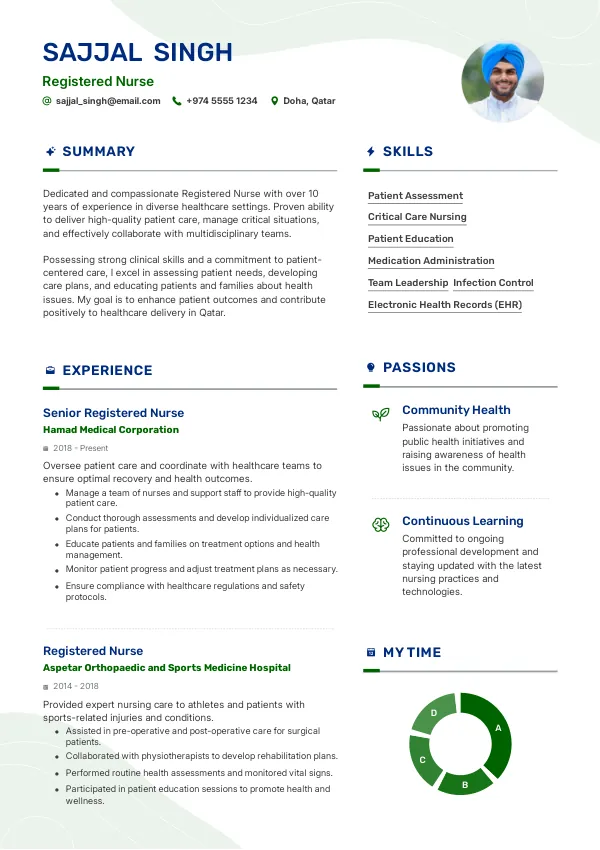
Understanding the Importance of a Strong Resume
As a Registered Nurse in Qatar, your resume is your first point of contact with potential employers. The healthcare sector is competitive, and even minor mistakes can reduce your chances of securing an interview. Common resume errors can lead to missed opportunities, so it’s crucial to ensure your CV is polished and tailored for the role. Consider reviewing your resume with mistakes.cv to catch hidden mistakes that could hinder your application.
How Recruiters and ATS Evaluate Nursing Resumes
Recruiters and applicant tracking systems (ATS) screen resumes to identify qualified candidates for nursing positions. They look for specific keywords related to skills, certifications, and experience. Many candidates are rejected due to formatting issues or failure to include relevant information. A professional review can help you identify these unnoticed problems and refine your CV accordingly.
Understanding how your resume will be evaluated can help you craft a document that stands out to recruiters. Make sure to align your experiences with the requirements of the position you’re applying for.
Ensure your resume meets industry standards with expert insights.
Review NowCommon Resume Mistakes for Registered Nurses
Mistake #1 – Poor Formatting
Why this hurts
Inconsistent formatting can distract recruiters and ATS from your qualifications. It may lead to misunderstandings about your experience and skills.
Example
- Bad: Using multiple font types and sizes.
- Better: Maintaining a consistent font style and size throughout.
How to fix
- Use a single font style and size for the entire resume.
- Ensure uniformity in headings and bullet points.
Mistake #2 – Lack of Keywords
Why this hurts
ATS often screens out resumes that lack relevant keywords. If your resume doesn’t match the job description, it may not reach human eyes.
Example
- Bad: Listing vague duties without specific terms.
- Better: Using keywords like 'patient care', 'medication administration', and 'clinical assessments'.
How to fix
- Review the job description for keywords and incorporate them into your resume.
- Highlight your specific skills using industry-relevant terms.
Mistake #3 – Irrelevant Experience
Why this hurts
Including unrelated experiences can dilute your qualifications and make your resume less focused. Recruiters want to see how your experience aligns with nursing.
Example
- Bad: Detailing a non-nursing job in extensive detail.
- Better: Summarizing unrelated work while focusing on relevant nursing roles.
How to fix
- Prioritize nursing-related experience and skills that align with the job.
- Limit unrelated job descriptions to a few lines.
Mistake #4 – Missing Certifications
Why this hurts
Omitting necessary certifications can lead to automatic disqualification. Recruiters expect to see relevant licenses prominently displayed.
Example
- Bad: Not mentioning your nursing license or certifications.
- Better: Listing them clearly in a dedicated section.
How to fix
- Include all relevant certifications, such as your nursing license, in a separate section.
- Make sure to specify the issuing authority and date.
Mistake #5 – Weak Objective Statement
Why this hurts
A generic objective statement fails to capture attention. Recruiters prefer specific statements that align with the role.
Example
- Bad: “Looking for a nursing position.”
- Better: “Dedicated Registered Nurse seeking to leverage clinical expertise at [Hospital Name] to enhance patient care.”
How to fix
- Craft a targeted objective that reflects your nursing goals and the specific position.
- Incorporate the hospital's name to personalize your statement.
Mistake #6 – Overloading with Jargon
Why this hurts
Using excessive medical jargon can alienate recruiters who may not be familiar with specific terms. Clear communication is key.
Example
- Bad: “Administered pharmacological interventions per protocol.”
- Better: “Administered medications and monitored patient responses.”
How to fix
- Simplify language while maintaining professionalism.
- Focus on clarity to ensure all readers understand your qualifications.
Mistake #7 – Lengthy Resumes
Why this hurts
Resumes longer than two pages can overwhelm recruiters. They typically prefer concise summaries of qualifications.
Example
- Bad: A three-page detailed narrative of your career.
- Better: A two-page focused summary highlighting key skills and experiences.
How to fix
- Limit your resume to two pages, highlighting essential experiences.
- Focus on the most relevant roles and achievements.
Mistake #8 – Neglecting Soft Skills
Why this hurts
Soft skills are crucial in nursing, yet they are often overlooked. Recruiters want to see these skills emphasized in your resume.
Example
- Bad: No mention of teamwork or communication.
- Better: “Collaborated with multidisciplinary teams to improve patient outcomes.”
How to fix
- Incorporate soft skills into your experience descriptions.
- Provide examples of how these skills were applied in your nursing practice.
ATS-Specific Issues to Consider
ATS systems often reject resumes that do not follow specific formatting rules or lack relevant keywords. If your resume is saved in an incompatible file format, it may not be parsed correctly, leading to automatic disqualification. This is difficult to diagnose without an expert review. Utilize mistakes.cv to check your resume for ATS compatibility and ensure nothing is missed.
Mistakes by Experience Level
Entry-Level
Entry-level nurses often struggle with showcasing relevant clinical experience. They may also fail to highlight their education adequately. Ensure your CV emphasizes internships, volunteer work, and relevant coursework.
Mid-Level
Mid-level nurses should focus on leadership roles or specialized skills. Failing to demonstrate growth in responsibilities can be a drawback. Highlight promotions and specific achievements to show advancement.
Senior/Lead
Senior nurses must highlight their management experience and strategic contributions. Mistakes often include lack of quantifiable achievements. Include metrics and outcomes to illustrate your impact in previous roles.
Catch hidden mistakes that could cost you interviews.
Get FeedbackQuick Checklist for Your Nursing Resume
- Ensure consistent formatting and font usage.
- Incorporate relevant keywords from the job description.
- Focus on nursing-related experience and skills.
- List all necessary certifications clearly.
- Craft a tailored objective statement.
- Avoid excessive jargon; prioritize clarity.
- Limit your resume to two pages.
- Highlight essential soft skills.
- Use bullet points for readability.
- Review for ATS compatibility.
FAQs About Nursing Resumes in Qatar
What is the ideal length for a nursing resume?
The ideal length is typically one to two pages, depending on your experience.
Should I include references on my resume?
References can be provided upon request; it's best to leave them off your resume.
How often should I update my nursing resume?
Update your resume regularly, especially after gaining new skills or experiences.
What if I have gaps in my employment?
Address gaps briefly, focusing on what you learned or achieved during that time.
Can I use a CV instead of a resume?
In Qatar, a resume is preferred for nursing positions, but a CV can be used in academic settings.
Take Action Now to Improve Your Resume
Don’t let avoidable mistakes hold you back from landing your dream nursing job in Qatar. Review your resume today to ensure it meets the right standards and effectively showcases your qualifications. Use mistakes.cv for a professional second opinion and elevate your chances of securing that interview.
Start your journey to a stronger resume now!

 UAE
UAE Qatar
Qatar Saudi Arabia
 South Africa
 Brazil
 USA
USA Canada
 Australia
 United Kingdom
 New Zealand
 Singapore
 Germany
 France
 Spain
Spain Greece
 Italy
Italy India
India Philippines
 Malaysia
 Indonesia
 South Korea
 Japan
Japan