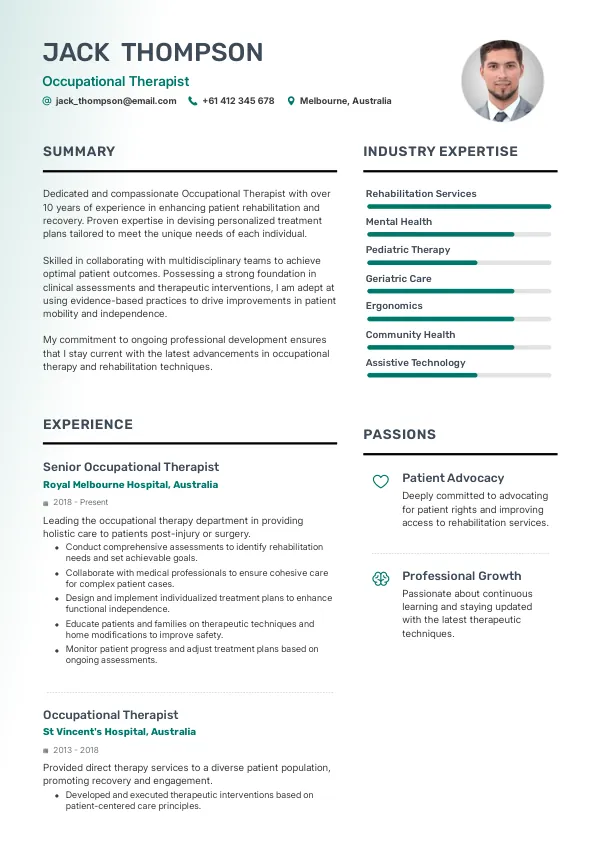
Introduction to Occupational Therapist Resume Mistakes
As an Occupational Therapist in Australia, your resume plays a crucial role in securing interviews. Unfortunately, many applicants overlook essential details, leading to missed opportunities. Common resume mistakes can hinder your chances of standing out in a competitive job market. To avoid repeated rejections, consider reviewing your resume with mistakes.cv for hidden errors.
How Recruiters Evaluate Occupational Therapist Resumes
Recruiters often use Applicant Tracking Systems (ATS) to filter resumes before they even reach human eyes. They look for specific qualifications, experience, and formatting that align with the job requirements. Many candidates are rejected for issues they are unaware of, making it beneficial to have an external review of your resume through mistakes.cv.
Understanding what recruiters prioritize can help you tailor your resume effectively, ensuring that you meet both ATS and human evaluation criteria.
Get expert feedback on your resume to avoid common pitfalls.
Review NowCommon Resume Mistakes for Occupational Therapists
Mistake #1 – Poor Formatting
Why this hurts
A cluttered or inconsistent format can distract recruiters from your qualifications. It may lead to misinterpretations of your experience or skills.
Example
- Bad: Multiple font types and sizes throughout the document.
- Better: Consistent use of a single font and size for body text, with clear headings.
How to fix
- Use a professional template with clear headings, bullet points, and consistent font.
Mistake #2 – Lack of Relevant Keywords
Why this hurts
Resumes lacking industry-specific keywords may not pass ATS scans, resulting in automatic rejection.
Example
- Bad: Generic terms like ‘helped patients’.
- Better: Specific phrases such as ‘developed individualized treatment plans for patients with rehabilitation goals’.
How to fix
- Incorporate keywords from the job description that align with your skills and experience.
Mistake #3 – Unclear Experience Framing
Why this hurts
Vague descriptions of your roles can lead to confusion about your capabilities and responsibilities.
Example
- Bad: ‘Responsible for patient care’.
- Better: ‘Conducted assessments and developed treatment strategies for diverse patient needs.’
How to fix
- Use action verbs and quantify your achievements to provide clarity.
Mistake #4 – Ignoring Soft Skills
Why this hurts
Occupational Therapy relies heavily on interpersonal skills, which must be highlighted in your resume.
Example
- Bad: ‘I like working with people’.
- Better: ‘Demonstrated strong communication and empathy skills in one-on-one therapy sessions.’
How to fix
- Highlight soft skills through examples of how they benefitted your patients or work environment.
Mistake #5 – Failing to Tailor Your Resume
Why this hurts
Sending a generic resume shows a lack of interest in the specific position and may result in disqualification.
Example
- Bad: A one-size-fits-all resume.
- Better: A resume customized to reflect the specific skills and experiences relevant to the job application.
How to fix
- Research the employer and ensure your resume aligns with their values and needs.
Mistake #6 – Overemphasis on Education
Why this hurts
While education is important, overemphasizing it can overshadow practical experience, which is crucial for this role.
Example
- Bad: Listing numerous educational details without context.
- Better: Balancing education with practical experience and achievements.
How to fix
- Focus on relevant experience and how your education supports your skills in practice.
Mistake #7 – Using an Unprofessional Email Address
Why this hurts
An unprofessional email can create a negative first impression.
Example
- Bad: ‘[email protected]’.
- Better: ‘[email protected]’.
How to fix
- Create an email address that includes your name and is free from nicknames or numbers.
Mistake #8 – Not Including a Professional Summary
Why this hurts
Without a professional summary, recruiters may miss the essence of your qualifications and what you bring to the role.
Example
- Bad: No summary present.
- Better: ‘Dedicated Occupational Therapist with over 5 years of experience in pediatric rehabilitation.’
How to fix
- Write a concise summary that encapsulates your main skills and experiences relevant to the job.
ATS-Specific Resume Issues
Many candidates fail to consider how ATS parses their resumes. Common ATS issues include using non-standard fonts, inappropriate file formats, and complex layouts. These factors can prevent your resume from being correctly interpreted, leading to automatic disqualification. Identifying these errors can be difficult without professional assistance. Consider using mistakes.cv for an ATS compatibility check.
Mistakes by Experience Level
Entry-Level
Entry-level Occupational Therapists often make the mistake of underselling their internships or volunteer experiences. Ensure you highlight relevant clinical placements, focusing on specific skills learned.
Mid-Level
Mid-level professionals might neglect to showcase leadership or specialization. Emphasizing roles where you led projects or specialized in certain areas can set you apart.
Senior/Lead
Senior applicants must avoid vague statements about responsibilities. Clearly define your contributions and outcomes from your leadership roles to demonstrate impact.
Ensure your resume meets ATS standards for greater visibility.
Check ATSQuick Resume Checklist for Occupational Therapists
- Use a clear, professional format.
- Incorporate relevant keywords from the job description.
- Frame your experiences with clarity and specific examples.
- Highlight both soft and hard skills.
- Customize your resume for each application.
- Ensure your email address is professional.
- Include a concise professional summary.
- Double-check for ATS compatibility.
- Limit jargon unless necessary.
- Keep your resume to two pages maximum.
FAQs About Occupational Therapist Resumes in Australia
What should I include in my resume as an Occupational Therapist?
Include relevant experience, education, certifications, and a summary that highlights your skills specific to the role.
How long should my resume be?
Your resume should ideally be two pages long, focusing on relevant and impactful information.
Do I need to tailor my resume for each job application?
Yes, tailoring your resume increases your chances of passing ATS and catching the recruiter's attention.
What common mistakes should I avoid?
Avoid poor formatting, lack of keywords, and ignoring soft skills to enhance your resume's effectiveness.
Can a professional review help me?
Absolutely! A professional review can identify mistakes you may overlook and improve your resume's impact.
Take Action to Improve Your Resume
Don't let resume mistakes hold you back from your dream job as an Occupational Therapist. Take the time to review and refine your resume to meet the expectations of Australian recruiters. Use mistakes.cv for a comprehensive review to uncover hidden errors that could hinder your application.
Start improving your resume today and increase your chances of landing an interview!

 UAE
UAE Qatar
Qatar Saudi Arabia
 South Africa
 Brazil
 USA
USA Canada
 Australia
 United Kingdom
 New Zealand
 Singapore
 Germany
 France
 Spain
Spain Greece
 Italy
Italy India
India Philippines
 Malaysia
 Indonesia
 South Korea
 Japan
Japan