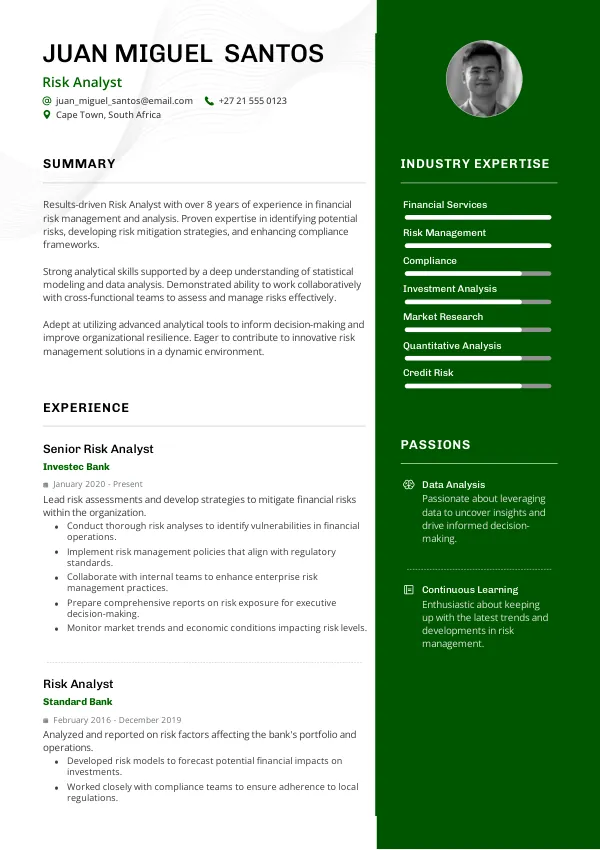
Understanding Resume Mistakes for Risk Analysts
As a Risk Analyst in South Africa, your resume is your first opportunity to impress potential employers. However, many candidates make errors that can significantly reduce their chances of landing an interview. Identifying and correcting these mistakes is crucial. Consider reviewing your resume with mistakes.cv to ensure you aren't repeating past errors.
How Recruiters Evaluate Your Resume
In South Africa, recruiters and hiring managers look for specific skills and keywords in resumes from Risk Analyst candidates. They often rely on Applicant Tracking Systems (ATS) to filter out resumes that don't meet their criteria. Many candidates are rejected due to mistakes they are unaware of. A careful external review could help you catch these hidden issues.
Understanding the evaluation process can guide you in crafting a more effective resume that aligns with what employers are seeking.
Ensure your CV is error-free and impactful.
Review NowCommon Resume Mistakes for Risk Analysts
Mistake #1 – Inconsistent Formatting
Why this hurts
Inconsistencies in formatting can distract recruiters and make your resume look unprofessional. It shows a lack of attention to detail, which is crucial for a Risk Analyst.
Example
- Bad: Mixed font sizes and styles throughout the document.
- Better: Consistent use of fonts and sizes for headings and body text.
How to fix
- Choose a clean, professional font and stick to it throughout your resume.
- Ensure that headings and bullet points are consistently formatted.
Mistake #2 – Vague Job Descriptions
Why this hurts
Recruiters look for quantifiable achievements. Vague descriptions fail to convey your actual impact in previous roles, leading to missed opportunities.
Example
- Bad: Responsible for risk analysis.
- Better: Conducted risk analysis that reduced potential losses by 20% over one year.
How to fix
- Use specific metrics and outcomes to highlight your accomplishments.
- Clearly articulate your responsibilities and their impact on the organization.
Mistake #3 – Ignoring Keywords
Why this hurts
ATS systems often filter out resumes that lack relevant keywords. If your resume lacks these terms, it may never reach a human recruiter.
Example
- Bad: Risk management experience without relevant keywords.
- Better: Experience in credit risk assessment, operational risk management, and risk mitigation strategies.
How to fix
- Analyze job descriptions to identify key skills and phrases.
- Incorporate these keywords naturally throughout your resume.
Mistake #4 – Lack of Tailoring
Why this hurts
Generic resumes for Risk Analyst positions show a lack of interest and effort. Tailoring your CV demonstrates genuine enthusiasm for the role.
Example
- Bad: Using the same CV for every application.
- Better: Customizing the CV to reflect the specific requirements of each job.
How to fix
- Revise your resume for each application, aligning your skills with the job description.
- Highlight experiences that are most relevant to the position.
Mistake #5 – Poor Experience Framing
Why this hurts
Framing your experience poorly can lead to misunderstandings about your qualifications. Clear framing helps recruiters quickly grasp your capabilities.
Example
- Bad: “Worked on risk projects.”
- Better: “Led a team to implement a risk assessment framework that improved compliance by 30%.”
How to fix
- Use active language and lead with accomplishments.
- Ensure your role in projects is clearly defined and impactful.
Mistake #6 – Missing Contact Information
Why this hurts
Missing contact details can prevent recruiters from reaching you for interviews. It may seem basic, but it's crucial.
Example
- Bad: No phone number or email.
- Better: Clear and updated contact details at the top.
How to fix
- Always include your full name, phone number, email, and LinkedIn profile.
- Ensure all contact information is accurate and professional.
Mistake #7 – Lack of Professional Summary
Why this hurts
A weak or missing professional summary fails to introduce you effectively. This is your chance to make a strong first impression.
Example
- Bad: “I am a Risk Analyst.”
- Better: “Detail-oriented Risk Analyst with over 5 years of experience in financial services, specializing in risk assessment and regulatory compliance.”
How to fix
- Craft a compelling summary that encapsulates your experience and strengths.
- Make sure it aligns with the job you are applying for.
Mistake #8 – Inadequate Attention to Soft Skills
Why this hurts
Soft skills are increasingly important in Risk Analyst roles. Failure to mention them can limit your appeal to recruiters.
Example
- Bad: Focus solely on technical skills.
- Better: Include communication, teamwork, and problem-solving skills in your CV.
How to fix
- Identify relevant soft skills and weave them into your job descriptions.
- Provide examples of how you’ve utilized these skills in your roles.


Common ATS Mistakes
ATS systems can filter out resumes based on formatting and keyword relevance. Common mistakes include using images, unusual fonts, and complex layouts that ATS cannot parse properly. These issues are often undetected by candidates, so using a service like mistakes.cv can help identify and rectify these problems effectively.
Mistakes by Experience Level
Entry-Level
Entry-level candidates often struggle with demonstrating relevant experience. Highlight internships, academic projects, and any volunteer work that relates to risk analysis. Avoid overly generic statements and focus on specific skills.
Mid-Level
Mid-level candidates should emphasize leadership abilities and quantifiable results from previous roles. Ensure that the resume reflects an upward trajectory in responsibilities and achievements.
Senior/Lead
Senior candidates need to showcase strategic thinking and decision-making skills. Highlight experience in managing teams and projects, as well as contributions to organizational goals. A lack of clear leadership examples can be detrimental.
Get a professional second opinion on your resume.
Get HelpQuick Checklist for Your CV
- Ensure consistent formatting throughout your CV.
- Quantify achievements and responsibilities.
- Incorporate relevant keywords from job descriptions.
- Tailor your CV for each application.
- Clearly frame your experience using active language.
- Include complete and accurate contact information.
- Craft a strong professional summary.
- Highlight both technical and soft skills.
- Review for ATS compatibility by avoiding complicated formats.
- Consider having your CV reviewed by mistakes.cv for a professional touch.
FAQs About Risk Analyst Resumes
What should I include in my Risk Analyst CV?
Include relevant experience, quantifiable achievements, and key skills that align with the job description.
How important is formatting for my CV?
Formatting is crucial as it impacts readability and professionalism. Stick to a clean layout.
How can I improve my chances of being noticed by recruiters?
Tailor your CV for each application, use relevant keywords, and highlight your most significant achievements.
What common mistakes should I avoid?
Avoid vague job descriptions, inconsistent formatting, and missing keywords that ATS might filter out.
Is it worth getting a professional review of my CV?
Yes, a professional review can provide insights into hidden mistakes that you may not notice.
Take Action Now to Improve Your Resume
Don't let common mistakes hold you back from landing your dream job as a Risk Analyst. Take the next step by reviewing your resume with mistakes.cv to ensure it meets all the necessary criteria.
Enhance your chances of success by refining your CV today!

 UAE
UAE Qatar
Qatar Saudi Arabia
 South Africa
 Brazil
 USA
USA Canada
 Australia
 United Kingdom
 New Zealand
 Singapore
 Germany
 France
 Spain
Spain Greece
 Italy
Italy India
India Philippines
 Malaysia
 Indonesia
 South Korea
 Japan
Japan