Introduction
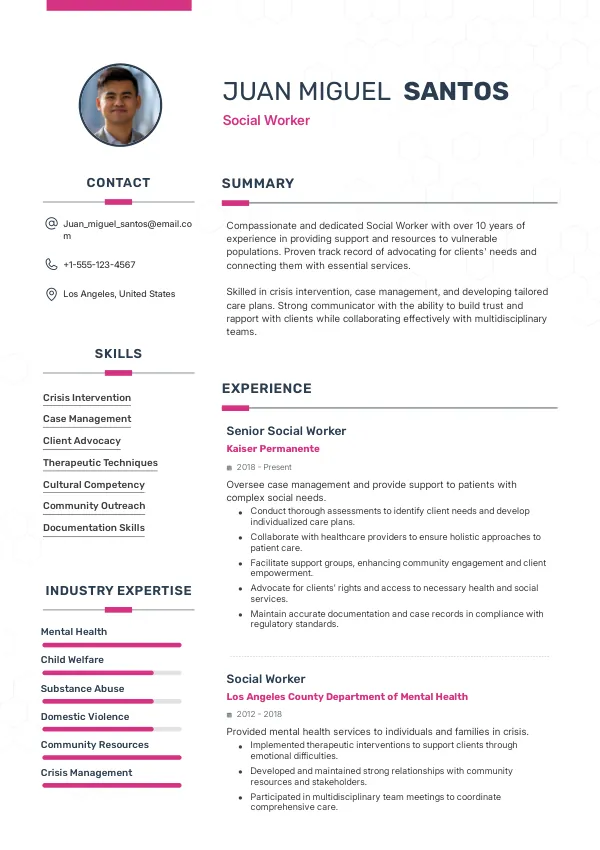
As a social worker in the United States, your resume is your first opportunity to make an impression. However, many candidates make critical mistakes that hinder their chances of landing interviews. Understanding what these mistakes are and how to avoid them is essential for your success. Consider reviewing your resume with mistakes.cv early in your application process to prevent repeated rejections.
How Recruiters Evaluate Social Worker Resumes
Recruiters and ATS (Applicant Tracking Systems) evaluate resumes based on specific criteria relevant to the social work profession. They look for relevant experience, education, and keywords that match the job description. Often, candidates are rejected for issues they may not even notice. An external review can help identify these hidden mistakes.
Many resumes are filtered out due to formatting errors or lack of keyword relevance, which means your carefully crafted experience might never reach a human eye.
Review your resume for common errors to boost your chances.
Get ReviewedCommon Resume Mistakes for Social Workers
Mistake #1 – Poor Formatting
Why this hurts
Recruiters may find it difficult to read resumes that are cluttered or poorly formatted. A chaotic layout can leave a negative impression and cause the ATS to misinterpret information.
Example
- Bad: Using multiple font styles and sizes.
- Better: Consistent use of one or two professional fonts.
How to fix
- Use clear headings and bullet points to organize information.
- Maintain consistent formatting throughout the document.
Mistake #2 – Lack of Keywords
Why this hurts
Many social worker positions require specific skills and qualifications. Failing to include relevant keywords can result in your resume being overlooked by ATS.
Example
- Bad: Listing generic skills like 'communication.'
- Better: Including keywords such as 'case management' and 'crisis intervention.'
How to fix
- Review job postings and incorporate keywords into your resume.
- Focus on industry-specific terminology.
Mistake #3 – Vague Job Descriptions
Why this hurts
Recruiters want to see clear, quantifiable achievements that demonstrate your impact. Vague descriptions can come off as unconvincing.
Example
- Bad: 'Responsible for managing cases.'
- Better: 'Managed a caseload of 30+ clients, achieving a 90% satisfaction rate.'
How to fix
- Use specific metrics and outcomes to illustrate your contributions.
- Highlight relevant successes that align with the job description.
Mistake #4 – Overloading with Irrelevant Information
Why this hurts
Including unrelated work experience or excessive personal details can dilute your resume. Recruiters seek relevant information that pertains to the job.
Example
- Bad: Listing part-time jobs from years ago.
- Better: Focusing on social work-related experiences.
How to fix
- Tailor your resume by excluding information that does not relate to social work.
- Keep the focus on relevant skills and experience.
Mistake #5 – Inconsistent Job Titles
Why this hurts
Inconsistency in job titles can confuse recruiters and ATS. Clarity is key when presenting your career progression.
Example
- Bad: 'Social Worker I' in one place and 'Social Worker' elsewhere.
- Better: Use a consistent title throughout.
How to fix
- Standardize job titles for clarity.
- Ensure consistent terminology throughout your resume.
Mistake #6 – Ignoring Professional Development
Why this hurts
Recruiters value ongoing education and professional development. Neglecting to include certifications or training can weaken your candidacy.
Example
- Bad: Omitting training details.
- Better: Listing relevant certifications and workshops.
How to fix
- Include a section for professional development on your resume.
- Highlight any relevant courses or certifications.
Mistake #7 – Spelling and Grammar Errors
Why this hurts
Errors in spelling and grammar can reflect poorly on your attention to detail. Recruiters expect professionalism in application materials.
Example
- Bad: 'I am a social worker with great communication skils.'
- Better: 'I am a social worker with great communication skills.'
How to fix
- Proofread your resume multiple times.
- Consider using a grammar-checking tool or having someone review it.
Mistake #8 – Not Tailoring Your Resume
Why this hurts
Using a one-size-fits-all resume can be detrimental. Each position may require different skills and experience to be highlighted.
Example
- Bad: Sending the same resume to every employer.
- Better: Customizing your resume for each application.
How to fix
- Review job descriptions carefully and modify your resume accordingly.
- Highlight experiences that align closely with the role.
ATS-Specific Resume Issues
ATS systems often struggle with specific formatting, such as tables or graphics, which can lead to important information being missed. Additionally, many candidates fail to use the right keywords, causing their resumes to be filtered out. These ATS-related issues are often hard to diagnose without an automated or expert review. Consider using mistakes.cv to identify potential ATS problems in your resume.
Mistakes by Experience Level
Entry-Level
Entry-level social workers often underestimate the importance of relevant internships and volunteer experiences. It's crucial to highlight these experiences prominently, as they can showcase your skills and commitment to the field.
Mid-Level
Mid-level candidates sometimes fail to demonstrate leadership roles or project management experiences. Clearly articulating these aspects can significantly enhance your appeal to recruiters.
Senior/Lead
Senior social workers should focus on strategic impact and leadership contributions. Highlighting your ability to mentor others and lead initiatives is vital for showcasing your seniority.
Ensure your resume is ATS-friendly for better visibility.
Check ATSQuick Checklist for Your Resume
- Use a professional format with consistent fonts.
- Incorporate job-specific keywords.
- Be specific about your achievements and outcomes.
- Avoid irrelevant information.
- Standardize your job titles.
- Highlight professional development and certifications.
- Check for spelling and grammar errors.
- Customize your resume for each application.
- Review ATS compatibility.
- Seek a second opinion with mistakes.cv.
Frequently Asked Questions
What is the ideal length for a social worker resume?
A social worker resume should ideally be one page, especially for entry and mid-level positions. Senior candidates may extend to two pages if necessary.
How often should I update my resume?
Update your resume whenever you gain new experience or skills, or at least annually to ensure it reflects your most current qualifications.
Is it necessary to include a cover letter?
While not always required, a well-crafted cover letter can help you stand out and explain your fit for the role in more detail.
What should I do if I have gaps in my employment?
Be honest about gaps and consider framing them positively by highlighting any related activities or skills acquired during that time.
How can I improve my chances in a competitive job market?
Tailoring your resume for each position and seeking a review from mistakes.cv can significantly enhance your application’s effectiveness.
Take Action Now
Your resume is a crucial tool in your job search as a social worker. Don’t let avoidable mistakes undermine your chances of landing an interview. Review your resume with mistakes.cv today to identify and correct any errors, ensuring you present the best version of yourself to potential employers.
Improving your resume can make all the difference in a competitive job market, so don't hesitate to seek help!

 UAE
UAE Qatar
Qatar Saudi Arabia
 South Africa
 Brazil
 USA
USA Canada
 Australia
 United Kingdom
 New Zealand
 Singapore
 Germany
 France
 Spain
Spain Greece
 Italy
Italy India
India Philippines
 Malaysia
 Indonesia
 South Korea
 Japan
Japan