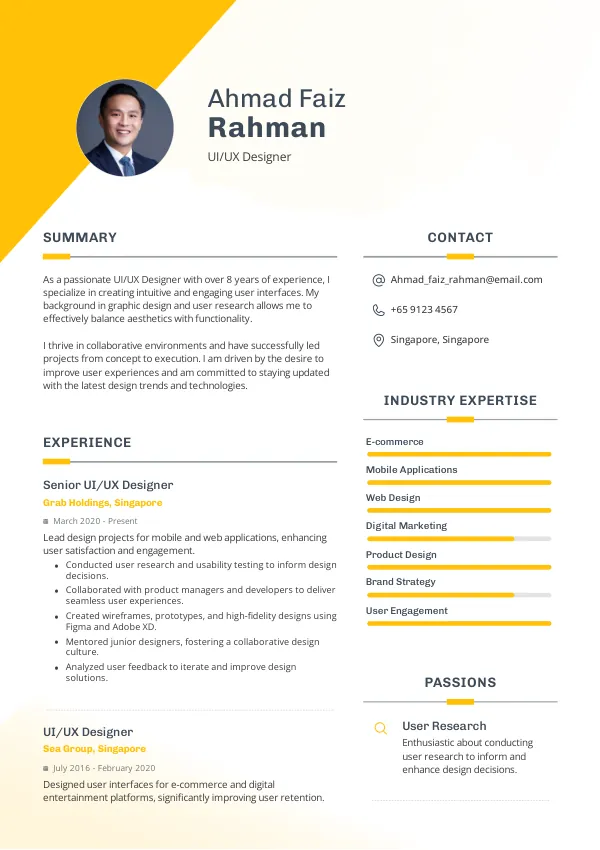
Introduction to UI/UX Designer Resumes
In the competitive job market of Singapore, UI/UX designers must present resumes that effectively showcase their skills and creativity. Unfortunately, many candidates fall victim to common resume mistakes that significantly reduce their chances of securing an interview.
To stand out, it's vital to review your resume for these hidden errors, which can be easily overlooked without an external review. Consider using mistakes.cv to spot these issues early.
How Recruiters Evaluate UI/UX Designer Resumes
Recruiters in Singapore focus on specific elements when evaluating resumes. They look for relevant experience, creative problem-solving skills, and the ability to work collaboratively. Additionally, they leverage ATS systems to filter out resumes based on keyword matches and formatting.
Many candidates are rejected for mistakes they are unaware of, making an external review invaluable. A service like mistakes.cv can help identify these overlooked issues.
Identify and fix your resume mistakes today.
Review NowCommon Resume Mistakes for UI/UX Designers
Mistake #1 – Poor Formatting
Why this hurts
Inconsistent formatting can distract recruiters and create a negative first impression. It suggests a lack of attention to detail.
Example
- Bad: Different fonts and sizes throughout the document.
- Better: A uniform font style and size across all sections.
How to fix
- Choose one font and stick to it. Use headings and bullet points for clarity.
Mistake #2 – Lack of Tailoring
Why this hurts
A generic resume fails to highlight relevant skills and experiences, making it difficult for recruiters to see your fit for the role.
Example
- Bad: A resume that mentions skills unrelated to UI/UX.
- Better: A tailored resume that highlights specific UI/UX projects and experiences.
How to fix
- Read the job description carefully and align your resume content accordingly.
Mistake #3 – Missing Keywords
Why this hurts
Without relevant keywords, ATS may filter out your resume, preventing it from reaching a human recruiter.
Example
- Bad: A resume lacking terms like “user experience” or “design thinking.”
- Better: A resume rich in industry-specific keywords.
How to fix
- Incorporate keywords from the job description into your resume naturally.
Mistake #4 – Weak Experience Framing
Why this hurts
Simply listing duties does not demonstrate your impact or contributions. Recruiters want to see results.
Example
- Bad: "Worked on design projects."
- Better: "Led a design project that increased user engagement by 30%."
How to fix
- Use action verbs and quantify your achievements where possible.
Mistake #5 – Ignoring Visual Appeal
Why this hurts
As a UI/UX designer, your resume is a reflection of your design skills. A visually unappealing resume can be off-putting.
Example
- Bad: A text-heavy resume with no design elements.
- Better: A well-designed resume balancing text and visuals.
How to fix
- Apply design principles to your resume to create an engaging layout.
Mistake #6 – Inconsistent Language
Why this hurts
Using varying language styles can confuse recruiters and detract from your professionalism.
Example
- Bad: Mixing formal and informal language.
- Better: Consistent professional language throughout.
How to fix
- Proofread your resume for language consistency.
Mistake #7 – Overloading with Information
Why this hurts
Including too much information can overwhelm recruiters and dilute your key messages.
Example
- Bad: A resume with lengthy descriptions for every role.
- Better: Concise descriptions focusing on key achievements.
How to fix
- Limit each position to 3-4 bullet points highlighting your most significant contributions.
Mistake #8 – Inadequate Contact Information
Why this hurts
If recruiters cannot easily contact you, they may move on to other candidates.
Example
- Bad: Missing phone number or email.
- Better: Clearly listed contact information at the top.
How to fix
- Ensure your contact details are up-to-date and prominently displayed.
ATS-Specific Resume Issues
ATS systems are crucial in the hiring process, especially for design roles. They parse resumes to identify relevant skills and experiences. Common ATS mistakes include using non-standard file types, which can lead to parsing errors, and failing to include keywords.
Without an automated or expert review, these ATS-related issues can be difficult to identify. Consider using mistakes.cv for a thorough check of your resume's ATS compatibility.
Resume Mistakes by Experience Level
Entry-level
Entry-level candidates often struggle with showcasing relevant experience. Highlighting internships or academic projects can help bridge the gap.
Mid-level
Mid-level designers should focus on demonstrating leadership in projects and the impact of their work. Avoid vague job descriptions and emphasize results.
Senior/Lead
Senior designers must convey strategic thinking and mentorship abilities. Emphasize your role in guiding teams and driving design strategy.
Ensure your resume passes ATS checks effortlessly.
Check ATSQuick Checklist to Review Your Resume
- Ensure consistent formatting throughout.
- Tailor your resume for each application.
- Incorporate relevant keywords from job descriptions.
- Frame experiences with quantifiable results.
- Apply design principles for visual appeal.
- Maintain consistent language and tone.
- Limit information overload.
- Include clear and accessible contact details.
- Use standard file formats (PDF, DOCX).
- Consider a professional review with mistakes.cv.
Frequently Asked Questions
What common mistakes do UI/UX designers make on their resumes?
Common mistakes include poor formatting, generic content, and missing keywords that ATS requires.
How can I tailor my resume for a UI/UX position?
Align your skills and experiences with the job description, emphasizing relevant projects.
What should be included in a UI/UX designer's resume?
Focus on your design skills, project experience, and any measurable impacts you've made.
Why is visual appeal important in a design resume?
A visually appealing resume reflects your design skills and creativity, making a strong first impression.
How can mistakes.cv help me with my resume?
Mistakes.cv provides a comprehensive review to identify hidden errors and improve your resume's effectiveness.
Take Action to Improve Your Resume
Your resume is your first opportunity to impress potential employers. Don't let simple mistakes hold you back from landing your dream UI/UX role.
Consider reviewing your resume using mistakes.cv to ensure it reflects your best self and meets industry standards.

 UAE
UAE Qatar
Qatar Saudi Arabia
 South Africa
 Brazil
 USA
USA Canada
 Australia
 United Kingdom
 New Zealand
 Singapore
 Germany
 France
 Spain
Spain Greece
 Italy
Italy India
India Philippines
 Malaysia
 Indonesia
 South Korea
 Japan
Japan